





We may receive a portion of sales if you purchase a product through a link in this article.
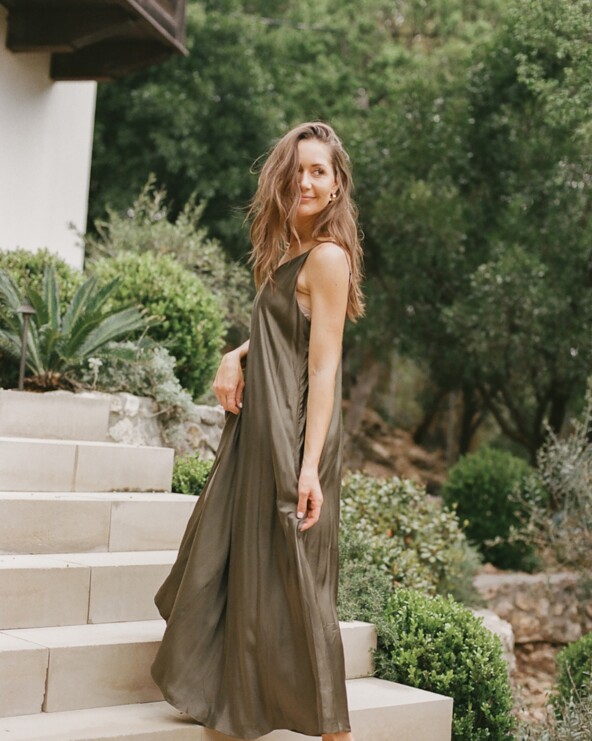
Spring makes you want to become someone slightly different. Someone who wakes up early, wears linen, goes to the farmer’s market, and casually arranges tulips like it’s second nature.
And honestly, I love that version of things. My Pinterest is proof that I’ve been waiting for this season all year—pastels filling my saved boards, spaces that somehow always have the perfect light, and every kind of flower that blooms between March and May. I’m the person who will happily spend a weekend afternoon wandering Portland (where life is “weird” but good), chasing cherry blossoms and magnolias in every shade of pink, white, and yellow, like it’s a completely reasonable way to spend three hours.
What It Actually Means to Romanticize Your Spring
Sure, there’s something a little precious about it. But romanticizing spring was never meant to be about perfection—or turning your life into a curated mood board you can’t actually keep up with.
Because in reality, most days don’t look like that. You’re answering emails, running errands, checking your phone more than you’d like—and still wondering why the season doesn’t feel as magical as you thought it would.
That’s where romanticizing your spring gets misunderstood. It’s not about becoming a different person or suddenly living a life that looks beautiful from the outside. It’s about paying closer attention to the one you already have, and letting it feel a little softer and slower—and taking the time to notice the magic all around you.

Why Spring Makes You Feel Like You Should Have Your Life Together
Spring shows up, and suddenly the bar shifts. The days are longer, the light is better, and people are outside again—walking more, making plans, and generally acting like they have a handle on things. Your group chats come back to life. Your weekends start to fill in. And without really deciding to, you start holding yourself to a slightly higher standard.
You should probably be working out. Getting outside more. Cooking something fresh instead of defaulting to the same three meals. Becoming, somehow, the version of yourself who just thrives this time of year.
None of this is explicit, but it’s easy to internalize. Spring doesn’t just bring new energy—it brings the expectation that you should be doing something with it. And if you’re not paying attention, that expectation can turn what’s meant to feel light and expansive into something that feels just a little bit like pressure.
Romanticize Your Spring: Simple Rituals That Actually Feel Good
You don’t need to overhaul your life to make spring feel more beautiful. Most of the time, it’s about small shifts: the way you start your morning, how you move through your day, and what you choose to notice. These aren’t things to add to your list—they’re ways of moving through what you’re already doing, just with a little more intention.
Morning
1. Open the windows before you check your phone. Let the air and light in before anything else has a chance to set the tone. Even a minute of this—before texts or email—creates a different starting point for your day.
2. Step outside for five minutes, and don’t bring anything with you. No phone, no coffee, no agenda. Just stand there for a minute longer than feels necessary. Let your body register: we’re here, it’s spring.
3. Wear something that feels like spring (even if no one sees you). Something lighter, softer, a color you’ve been waiting to wear. Not for the aesthetic, but because it subtly shifts how you move through your day.
Daytime
4. Take one walk without headphones, and follow what catches your attention. Instead of your usual loop, let yourself wander a little. Turn when something looks interesting. Stop when your eyes pick up on color. It turns a walk into something you’re actually aware of.
5. Choose a spring errand, and make it unnecessarily enjoyable. Walk to get your coffee instead of driving. Take the longer route home. Stop to look at flowers like you’re not in a rush—because, for five minutes, you aren’t.
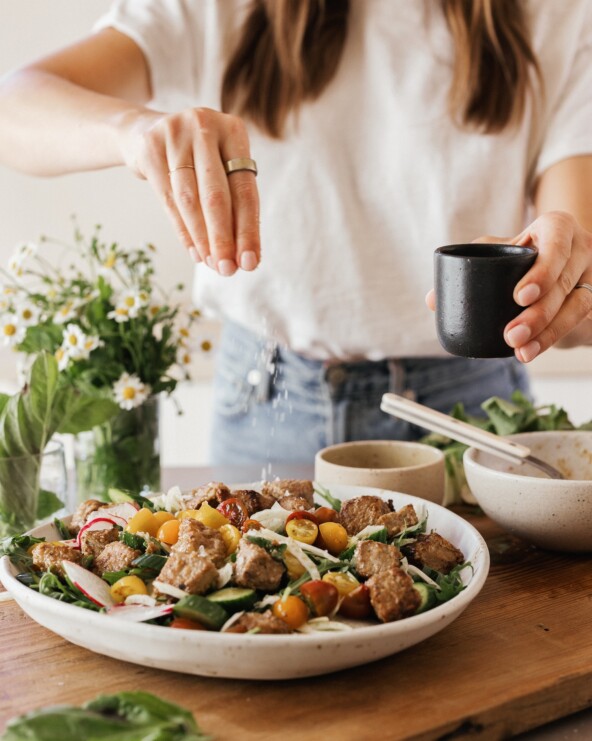
6. Borrow a cookbook from the library and cook something you’ve never made before. Not for productivity, not to “get good at cooking”—just to try something new. There’s something romantic about following a recipe you didn’t find on TikTok. (Say it with me: I will resist AI slop.)
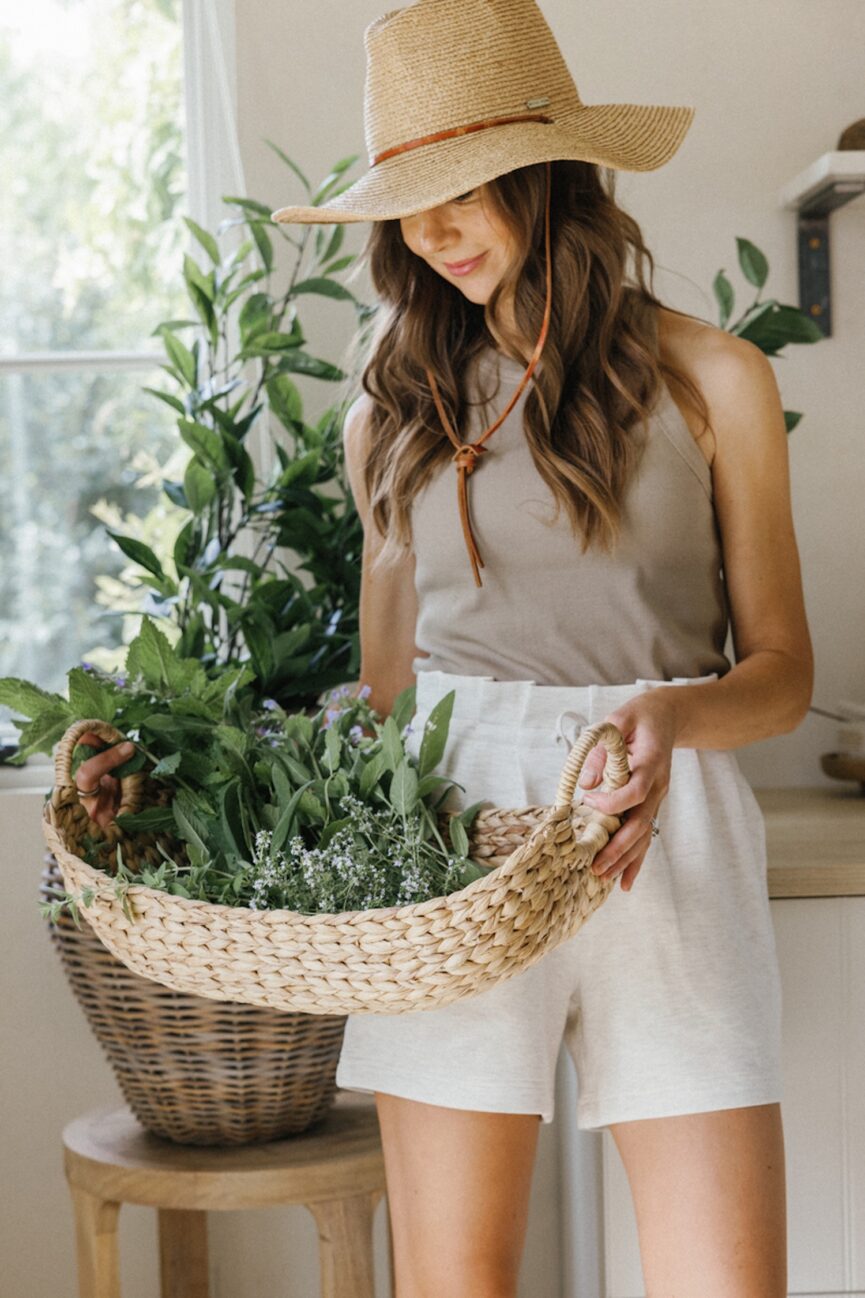
7. Bring something seasonal into your space, and move it until it changes the room. Clippings, branches, a bowl of citrus, even just rearranging what you already have. Treat your space like something you can interact with, not just exist in.
8. Do one everyday task more slowly than feels efficient, and notice what changes. Make lunch without rushing. Wash your face like you’re not trying to be done with it. The goal isn’t slowness for its own sake—it’s seeing how differently it feels.
9. Pick one street you’ve never walked down, and treat it like you’re visiting for the first time. Even if it’s five minutes from your house. Look at the details. Notice the homes, the trees, the way the light hits at that time of day. It’s a small way of interrupting autopilot.
Evening
10. Take a “closing walk” at the end of the day. A short loop around your block to signal that the day is done. It helps your body come down without overthinking it.
11. Let your evening happen outside first, inside second. Before you default to the couch, sit outside—even briefly. Bring your dinner, your drink, or nothing at all.
12. Create a soft end-of-day cue that doesn’t involve your phone. Lighting a candle, turning on a specific lamp, or opening a window again. Something small that signals a wind-down to the day.
13. Romanticize one weekday night like it’s a weekend. Put music on. Cook something slightly more involved than usual—or order something and plate it anyway. Let a random Tuesday feel like it counts.
Energy + Boundaries
14. Say no to one plan, and replace it with something you actually want to do. Not just canceling, but choosing something else: a walk, cooking, doing nothing on purpose. The point isn’t less—it’s better.
15. Leave space in your week on purpose. Not everything needs to be filled. The empty space is often the part that makes everything else feel better.
Awareness
16. Notice what’s blooming (literally or otherwise). The trees, the light, your own energy coming back online. Not everything needs to be changed—some things are already shifting on their own.
The Difference Between Romanticizing and Performing
You can do everything right and still feel like you’re performing your own life. Something that looks good, but doesn’t actually feel good. You buy the flowers, light the candle, put on the dress, and yet you still feel vaguely disconnected from your own life. Like you’re watching it instead of being in it.
That’s usually the difference. Performing your life is external. It’s about how things look, how they might be perceived, and whether they’re good enough to count. It often comes with an unspoken pressure to get it right.
Romanticizing your life is internal. It’s about how something feels while you’re inside of it.
It’s drinking your coffee outside because the air feels good—not because it would make a nice Instagram story. It’s taking the long way home because you want to explore, when the route you usually take is more efficient. It’s making a multi-course meal on a Tuesday night and not telling anyone about it.
There’s nothing to prove here. No version of your life you need to live up to. Just small moments that feel a little more like your own.
A Softer Way to Move Through Spring
Maybe this is what it actually looks like to romanticize your life—not more, not better, not beautifully optimized, but just letting your days feel a little more like your own. Reading before reaching for your phone. Taking the longer way home. A Tuesday night that’s more than a write-off. Spring doesn’t ask you to become a different person—it just offers a little more light, a little more space, and an invitation to meet your life where it already is.
Maybe that’s why I love romanticizing it so much.
Spring makes you want to become someone slightly different. Someone who wakes up early, wears linen, goes to the farmer’s market, and casually arranges tulips like it’s second nature.
And honestly, I love that version of things. My Pinterest is proof that I’ve been waiting for this season all year—pastels filling my saved boards, spaces that somehow always have the perfect light, and every kind of flower that blooms between March and May. I’m the person who will happily spend a weekend afternoon wandering Portland (where life is “weird” but good), chasing cherry blossoms and magnolias in every shade of pink, white, and yellow, like it’s a completely reasonable way to spend three hours.
What It Actually Means to Romanticize Your Spring
Sure, there’s something a little precious about it. But romanticizing spring was never meant to be about perfection—or turning your life into a curated mood board you can’t actually keep up with.
Because in reality, most days don’t look like that. You’re answering emails, running errands, checking your phone more than you’d like—and still wondering why the season doesn’t feel as magical as you thought it would.
That’s where romanticizing your spring gets misunderstood. It’s not about becoming a different person or suddenly living a life that looks beautiful from the outside. It’s about paying closer attention to the one you already have, and letting it feel a little softer and slower—and taking the time to notice the magic all around you.
Why Spring Makes You Feel Like You Should Have Your Life Together
Spring shows up, and suddenly the bar shifts. The days are longer, the light is better, and people are outside again—walking more, making plans, and generally acting like they have a handle on things. Your group chats come back to life. Your weekends start to fill in. And without really deciding to, you start holding yourself to a slightly higher standard.
You should probably be working out. Getting outside more. Cooking something fresh instead of defaulting to the same three meals. Becoming, somehow, the version of yourself who just thrives this time of year.
None of this is explicit, but it’s easy to internalize. Spring doesn’t just bring new energy—it brings the expectation that you should be doing something with it. And if you’re not paying attention, that expectation can turn what’s meant to feel light and expansive into something that feels just a little bit like pressure.
Romanticize Your Spring: Simple Rituals That Actually Feel Good
You don’t need to overhaul your life to make spring feel more beautiful. Most of the time, it’s about small shifts: the way you start your morning, how you move through your day, and what you choose to notice. These aren’t things to add to your list—they’re ways of moving through what you’re already doing, just with a little more intention.
Morning
1. Open the windows before you check your phone. Let the air and light in before anything else has a chance to set the tone. Even a minute of this—before texts or email—creates a different starting point for your day.
2. Step outside for five minutes, and don’t bring anything with you. No phone, no coffee, no agenda. Just stand there for a minute longer than feels necessary. Let your body register: we’re here, it’s spring.
3. Wear something that feels like spring (even if no one sees you). Something lighter, softer, a color you’ve been waiting to wear. Not for the aesthetic, but because it subtly shifts how you move through your day.
Daytime
4. Take one walk without headphones, and follow what catches your attention. Instead of your usual loop, let yourself wander a little. Turn when something looks interesting. Stop when your eyes pick up on color. It turns a walk into something you’re actually aware of.
5. Choose a spring errand, and make it unnecessarily enjoyable. Walk to get your coffee instead of driving. Take the longer route home. Stop to look at flowers like you’re not in a rush—because, for five minutes, you aren’t.
6. Borrow a cookbook from the library and cook something you’ve never made before. Not for productivity, not to “get good at cooking”—just to try something new. There’s something romantic about following a recipe you didn’t find on TikTok. (Say it with me: I will resist AI slop.)
7. Bring something seasonal into your space, and move it until it changes the room. Clippings, branches, a bowl of citrus, even just rearranging what you already have. Treat your space like something you can interact with, not just exist in.
8. Do one everyday task more slowly than feels efficient, and notice what changes. Make lunch without rushing. Wash your face like you’re not trying to be done with it. The goal isn’t slowness for its own sake—it’s seeing how differently it feels.
9. Pick one street you’ve never walked down, and treat it like you’re visiting for the first time. Even if it’s five minutes from your house. Look at the details. Notice the homes, the trees, the way the light hits at that time of day. It’s a small way of interrupting autopilot.
Evening
10. Take a “closing walk” at the end of the day. A short loop around your block to signal that the day is done. It helps your body come down without overthinking it.
11. Let your evening happen outside first, inside second. Before you default to the couch, sit outside—even briefly. Bring your dinner, your drink, or nothing at all.
12. Create a soft end-of-day cue that doesn’t involve your phone. Lighting a candle, turning on a specific lamp, or opening a window again. Something small that signals a wind-down to the day.
13. Romanticize one weekday night like it’s a weekend. Put music on. Cook something slightly more involved than usual—or order something and plate it anyway. Let a random Tuesday feel like it counts.
Energy + Boundaries
14. Say no to one plan, and replace it with something you actually want to do. Not just canceling, but choosing something else: a walk, cooking, doing nothing on purpose. The point isn’t less—it’s better.
15. Leave space in your week on purpose. Not everything needs to be filled. The empty space is often the part that makes everything else feel better.
Awareness
16. Notice what’s blooming (literally or otherwise). The trees, the light, your own energy coming back online. Not everything needs to be changed—some things are already shifting on their own.
The Difference Between Romanticizing and Performing
You can do everything right and still feel like you’re performing your own life. Something that looks good, but doesn’t actually feel good. You buy the flowers, light the candle, put on the dress, and yet you still feel vaguely disconnected from your own life. Like you’re watching it instead of being in it.
That’s usually the difference. Performing your life is external. It’s about how things look, how they might be perceived, and whether they’re good enough to count. It often comes with an unspoken pressure to get it right.
Romanticizing your life is internal. It’s about how something feels while you’re inside of it.
It’s drinking your coffee outside because the air feels good—not because it would make a nice Instagram story. It’s taking the long way home because you want to explore, when the route you usually take is more efficient. It’s making a multi-course meal on a Tuesday night and not telling anyone about it.
There’s nothing to prove here. No version of your life you need to live up to. Just small moments that feel a little more like your own.
A Softer Way to Move Through Spring
Maybe this is what it actually looks like to romanticize your life—not more, not better, not beautifully optimized, but just letting your days feel a little more like your own. Reading before reaching for your phone. Taking the longer way home. A Tuesday night that’s more than a write-off. Spring doesn’t ask you to become a different person—it just offers a little more light, a little more space, and an invitation to meet your life where it already is.
Maybe that’s why I love romanticizing it so much.