Try the two sleeves together
A dress and a jacket can each feel suitable alone while becoming awkward when layered. Before choosing the combination for an occasion, put the actual garments together and notice the relationship between their sleeves. Include cuffs, gathers and any intended fastening rather than assuming two labeled sizes will automatically work as a pair.
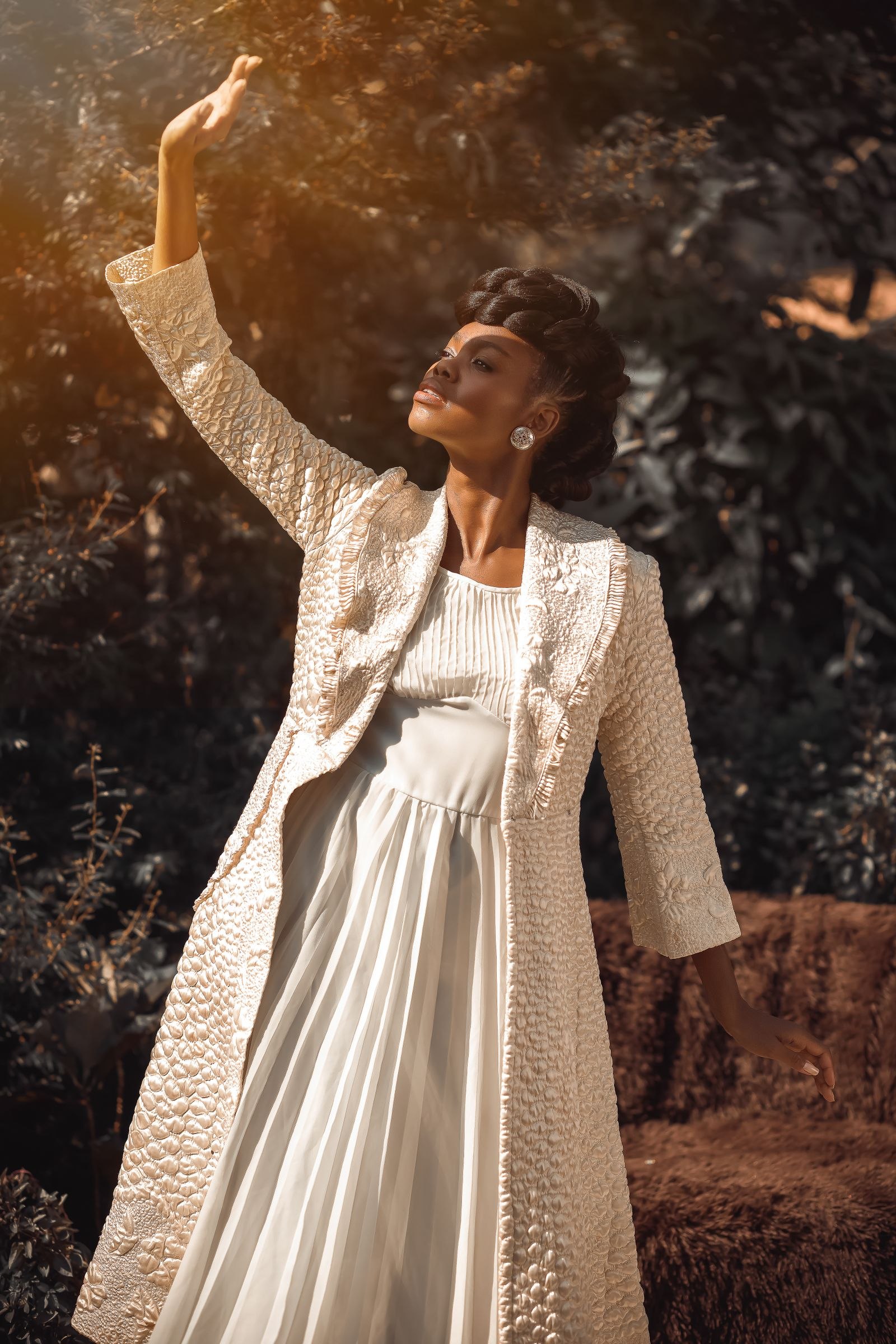
Use the garments according to their product information and the retailer's fitting arrangements where relevant. A photo of a light dress with a textured jacket is inspiration for a combination, not evidence that either pictured garment has a particular fiber or performance quality.
Check the ordinary arm movements
Try the movements the occasion genuinely involves, such as sitting, reaching appropriately for a bag or putting the jacket on and taking it off. Notice whether the dress sleeve gathers where the jacket feels close. Keep the observation specific to the actual pair and person.
Our dress closure guide includes ordinary handling rather than the standing view alone. The sleeve layer deserves the same practical test before the outfit is treated as ready.
Choose the visible cuff relationship
Decide whether the dress sleeve is meant to show beneath the jacket or remain inside it. Either can be a deliberate style choice when the garments support it appropriately. Judge the result with the jacket fastened as intended and with the rest of the retained outfit present.
Avoid solving an awkward layer by repeatedly tugging fabric into place. If the pairing requires constant adjustment, compare another suitable jacket or dress already owned. A small visual detail should not demand attention throughout the occasion.
Keep the product requirements clear
Read the actual material, lining and care information where it affects the decision. Similar-looking sleeves can behave differently because of cut and construction, but do not invent a technical explanation from appearance alone. Use verified product details and genuine fit observations.
The dress lining guide keeps such information tied to the garment. Layering is easier to assess when the details belong to the actual items instead of a general assumption about all dresses or all jackets.
Choose a pairing that stays useful
After the movement check, consider whether the jacket also works when removed and carried through the occasion's ordinary sequence. Keep the whole outfit practical rather than optimizing only the first mirror view. A suitable retained alternative may be more useful than a new purchase intended to rescue one awkward combination.
What if the sleeves bunch only while seated? Give that observation appropriate weight if much of the event involves sitting. What if the dress is sleeveless? Compare the actual jacket relationship without assuming that removes every fit question. A considered layer works through the occasion's movements as well as its photographs.
Published and updated May 12, 2023. Have a correction or a useful question? Contact the journal.