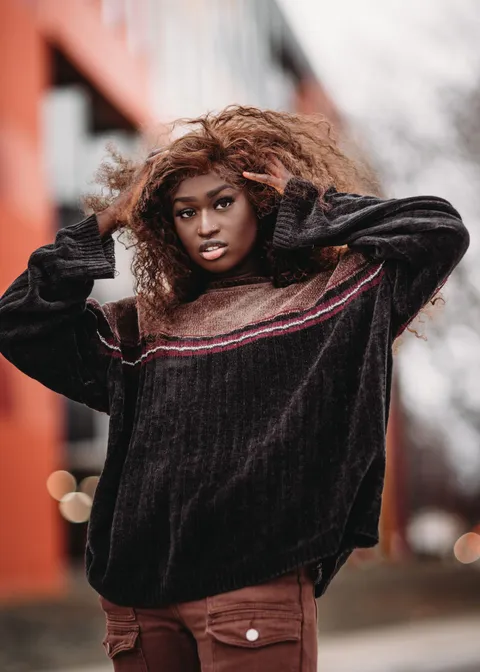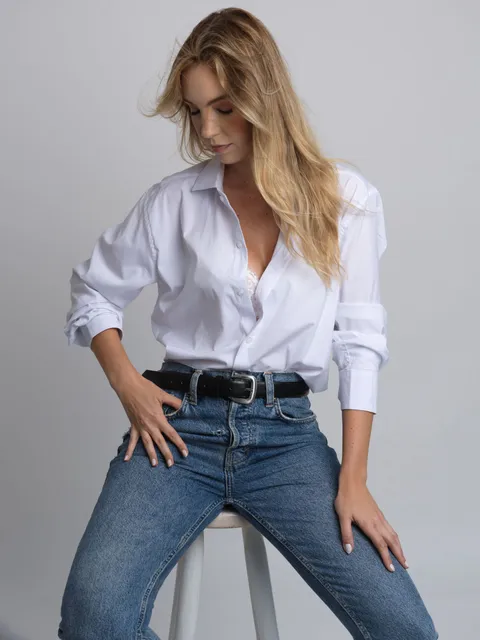
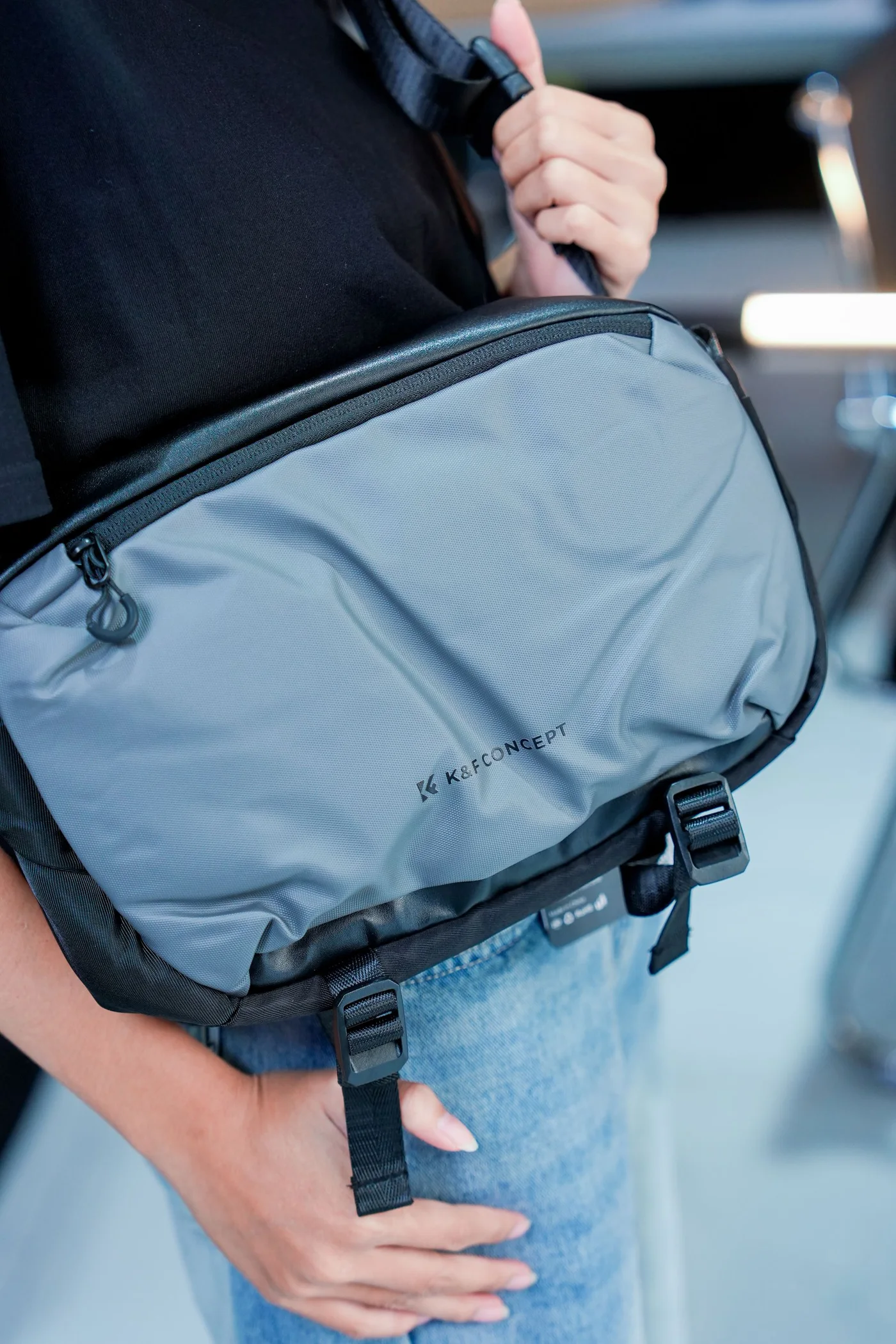
A crossbody bag gives casual clothing a practical carrying option.
Start with what you carry
Accessories become easier to choose when they solve a specific problem. Empty your everyday bag and remove unnecessary objects. Group the essentials: phone, keys, wallet, glasses and work items. Their combined dimensions provide a more useful shopping brief than a photograph of a stylish bag carried nearly empty.
A crossbody leaves hands free, but strap placement matters. Measure where you like the bag to sit over a light top and over a coat. Check the available adjustment range. A compact design that presses keys against a phone or forces glasses to travel without protection is too small for that routine, however appealing its shape.
Test access and empty weight
Pack your usual belongings if the shop permits or compare dimensions carefully online. Open and close the bag one-handed. A decorative buckle can become frustrating when you retrieve a travel card repeatedly. Check empty weight because metal hardware may make the bag heavy before anything goes inside. Carry it as you would on your route, not only by its top handle.
Inspect strap attachment points, lining and stitching. A pale lining can make objects easier to locate, while suitable pockets keep keys away from delicate surfaces. Extra compartments do not help if they consume the space you need. Choose an appropriate closure and avoid leaving valuables in an unsecured outer pocket during crowded journeys.
Give a belt a practical role
Measure a belt you use from the buckle pin to the working hole, then compare the seller's method. Trouser sizes do not translate directly, particularly across different rises. Confirm width against the garment loops. An attractive belt that cannot pass through your most-used trousers has a narrower role than its product photographs suggest.
If trousers need dramatic gathering, reconsider fit rather than tightening further. Try a plain buckle with a patterned top or textured sweater; a stronger buckle can supply the focal detail in a simple outfit. Metal finishes do not have to match exactly. Similar scale and a consistent level of formality can connect different accessories.
Fit jewelry to the day
Consider collars, sleeves and tasks. Long necklaces may catch on bag straps, bracelets can tap a keyboard and earrings may conflict with a headset. Choose pieces comfortable over hours. If you react to particular materials, read composition information and ask for clarification rather than accepting an undefined hypoallergenic description.
Put two or three combinations on a small tray near the wardrobe. Simple hoops and a watch could accompany a textured knit, while a pendant works with a plain shirt. Visibility makes repeating accessories easier and helps reveal duplicates. It can also prevent buying another nearly identical piece because existing jewelry is scattered in drawers.
A quick decision guide
| Accessory | Key measurement | Useful test |
|---|---|---|
| Crossbody | Internal size and strap drop | Pack daily essentials |
| Belt | Length to working hole | Check loops and seated fit |
| Earrings | Size, weight and composition | Try with collar and headset |
Buy the missing function
Rank recurring annoyances. A secure work bag may be more useful than another clutch, while a belt fitting two trousers can unlock several combinations. Compare care, repair possibilities, materials and delivered cost. Check returns for earrings and other personal accessories before ordering, since restrictions may differ from those for clothing.
Hold an accent color beside three existing outfits. A blue bag can work with cream, denim and gray without requiring matching shoes. If the purchase demands a new color scheme, pause. Value comes from finding the accessory, carrying it comfortably and using it repeatedly, whether you choose an affordable canvas option or a more expensive material with particular care needs.
A few useful answers
Must shoes and a bag match?
No. A repeated color elsewhere or a simple surrounding palette can make different shades feel intentional.
How many bags are necessary?
Cover genuinely different carrying needs. A laptop day and an evening may require different sizes; there is no minimum collection.
Published and updated October 10, 2026. Have a correction or a useful question? Contact the journal.