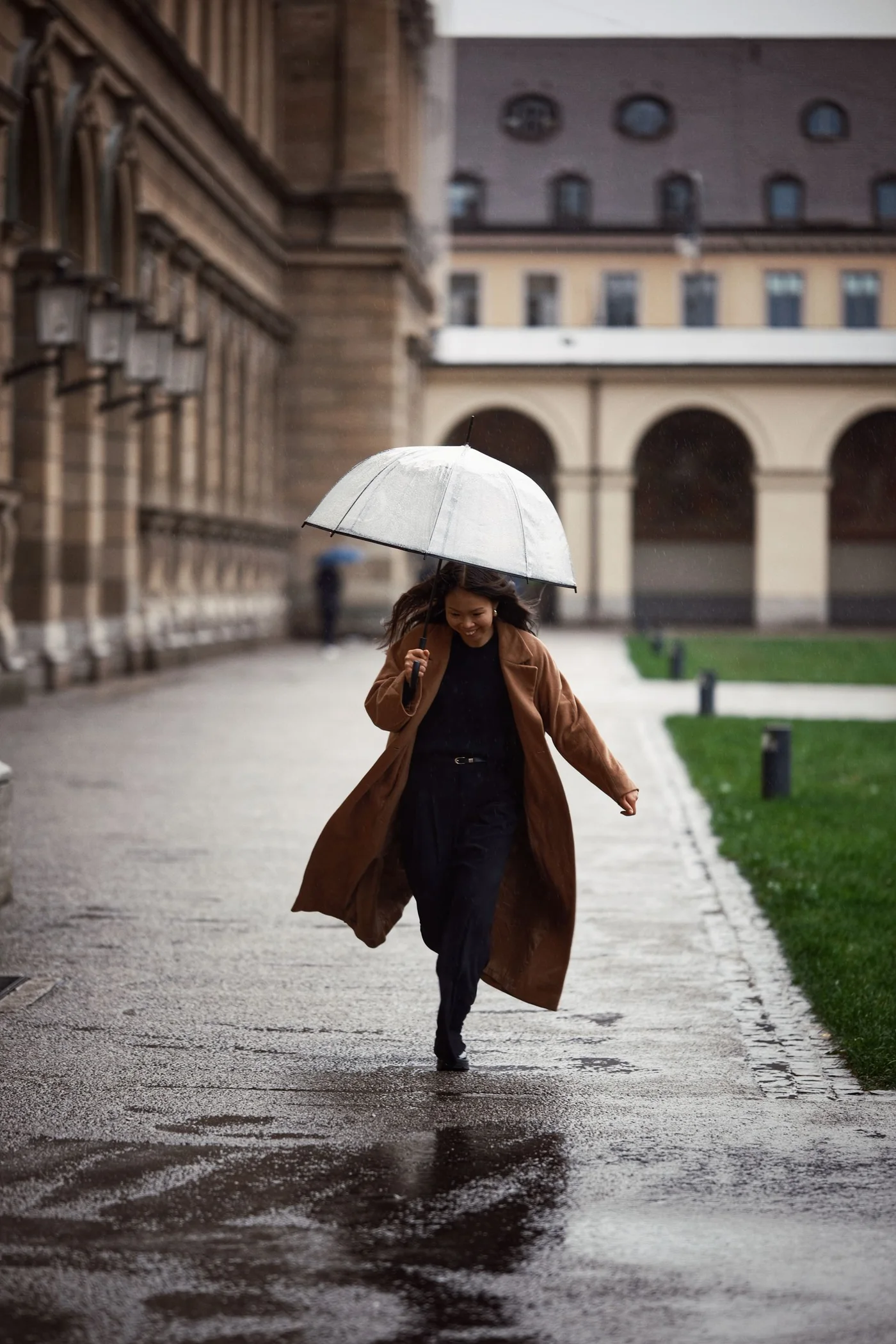
A coat and umbrella prepare for a walk along a wet city street.
Match clothes to the exposure
A dash from a car needs a different rain plan from a half-hour walk. Check how much of the route is uncovered and whether you can dry clothing at the destination. An umbrella may be enough for a short shower; a longer journey may call for a rain layer and shoes specifically intended for wet conditions.
Start at ground level. Long trouser hems and absorbent shoes can make the day uncomfortable even when your upper body stays dry. Choose trousers that clear the pavement or a skirt that will not brush puddles. Check length while walking, because fabric can fall differently in motion than it does while you stand in front of a mirror.
Read the outerwear details
Water-resistant and waterproof are different descriptions. Look for information about intended conditions, construction and care, and expect specific support for performance claims. Examine closures, hood adjustment and pockets as well as the main fabric. Open pocket tops may leave a phone exposed even when the coat looks substantial.
Fit the rain layer over the intended outfit. Reach forward and fasten it fully. A hood should adjust without covering your eyes or obstructing the view to the side. A longer coat protects more clothing but needs enough room for a full stride. Think about where you will put it when you arrive indoors.
Assess shoes for your route
Look for secure fit and an outsole suited to the normal surfaces you cross. Station floors, uneven paving and muddy paths present different conditions. Deep-looking tread alone does not establish grip, and fashion boots should not be assumed to have technical performance. Read the manufacturer's intended use and information about protection at seams and openings.
If you own suitable boots, check trouser length with those before buying another pair. Socks should not overcrowd the toe box. A dry spare pair may help during longer days. Follow drying instructions afterward; strong direct heat can be unsuitable for some materials. Wet shoes also need somewhere to dry away from delicate clothing and electronics.
Prepare for arrival
A compact umbrella carries easily but may cover less of a shoulder bag than a larger one. Compare open diameter, handle and folded size. In exposed wind, respect the product's limitations and choose sheltered routes when practical. No small accessory can make every weather condition convenient, so allow extra journey time when conditions demand it.
Use an umbrella stand or appropriate sleeve at the destination to avoid pooling water beside other belongings. Hang the coat where drying is permitted. A small washable cloth can help wipe a bag exterior, but do not pack wet things against a laptop. Planning the doorway matters as much as choosing an attractive coat for the street.
A quick decision guide
| Item | Useful feature | Tradeoff |
|---|---|---|
| Long rain layer | More outfit coverage | Bulk indoors |
| Compact umbrella | Easy carrying | Smaller covered area |
| Short trouser hem | Less pavement contact | More exposed ankle |
Fix the weakest point first
Record what failed on the last wet commute. If soaked cuffs were the problem, another bag will not solve it. Compare measurements, fastenings, stated weather protection and maintenance. Check footwear return terms before an indoor try-on and include space for the socks you intend to wear rather than sizing only around bare feet.
Use protective treatments only when suitable for the material, following the instructions. Avoid assuming every coat or shoe benefits from the same spray. An altered hem or simple umbrella may deliver the improvement you need. Spend on technical outerwear when actual exposure justifies it, and choose a piece you can maintain rather than relying on vague weatherproof language.
A few useful answers
Can a trench replace a rain jacket?
That depends on its stated protection and the conditions. A trench silhouette alone does not establish waterproof performance.
What is the simplest rain adjustment?
Often it is a hem that clears wet ground and footwear suitable for the route. Check those before adding more accessories.
Published and updated October 10, 2026. Have a correction or a useful question? Contact the journal.