
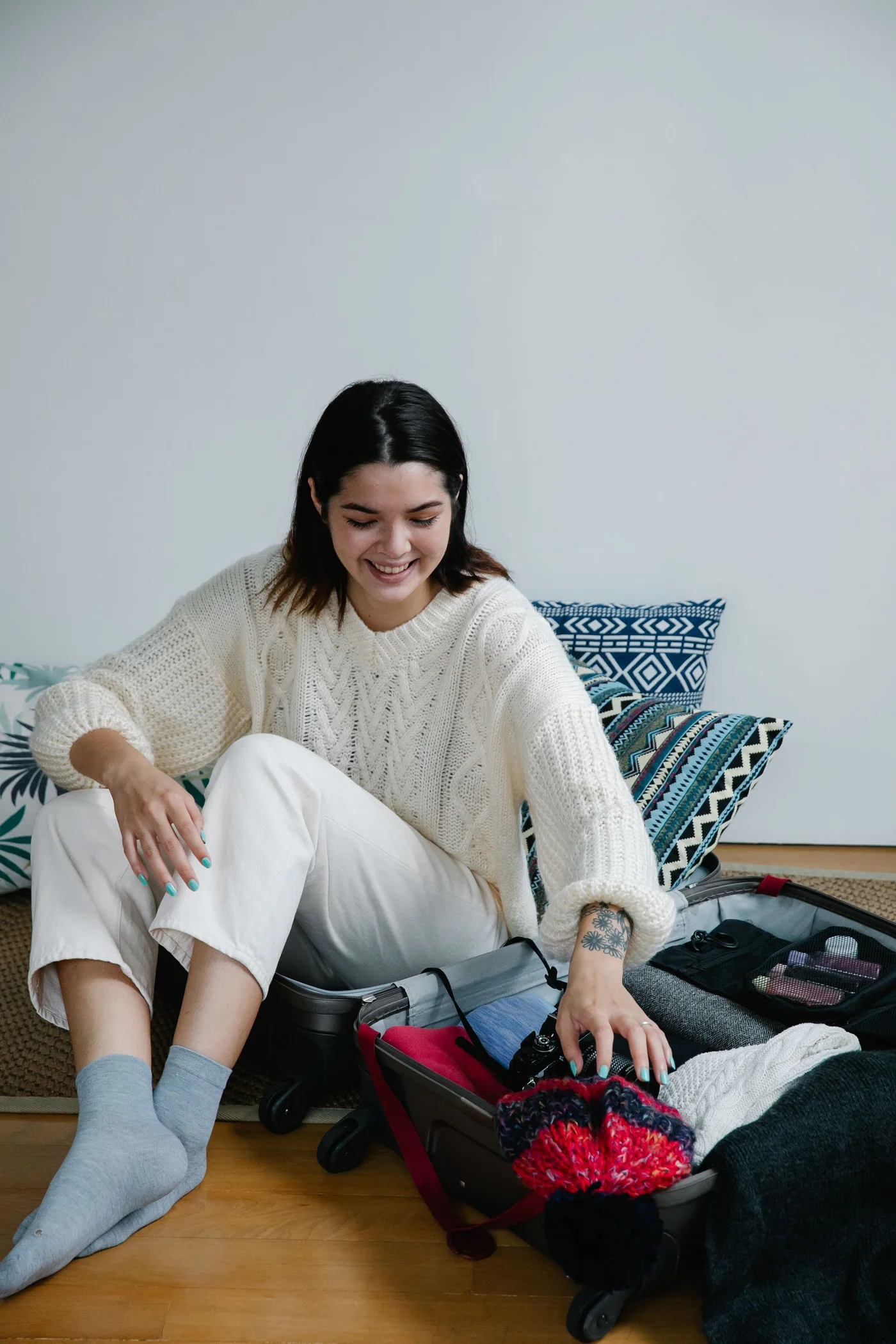
Packing a suitcase on the floor before a short break.
Write the weekend in ordinary scenes
Packing gets easier when you describe real moments rather than a vague need for options. Imagine a Friday journey, dinner near the hotel, a Saturday museum with lunch outdoors, and a Sunday departure after breakfast. Write those plans beside the forecast and confirmed dress requirements. The same trousers might work every day while a light layer matters more than a second evening outfit. Follow your booked activities and personal comfort rather than a rigid capsule formula. Add basics such as underwear and sleepwear to a written checklist so memorable outfits do not crowd them out.
Check current baggage rules for your exact operator and fare before choosing luggage. Dimensions, weight limits, and permitted item counts can vary between bookings. Measure wheels and handles when they count toward total dimensions. A case described as carry-on is not automatically accepted everywhere. Consult official guidance for restricted items.
Create outfits with a shared base
Choose a small color family from your wardrobe, such as navy, white, and tan. Pack two tops that work with the same bottom, then add more only when activities or laundry arrangements justify it. A shirt can be worn open over a simple top during the day and buttoned for dinner. Try the combinations before leaving, including footwear and the outer layer. Something that works only with an item you left behind is not really an outfit option.
Wear bulkier shoes on the journey when appropriate and keep any second pair purposeful. A weekend of walking and casual meals may not require occasion footwear. If you need another pair, use a shoe bag and account for its space. Avoid packing new shoes before understanding their fit. Put weather-related extras on the list rather than leaving them to a final distracted sweep of the wardrobe.
Use packing tools selectively
Cubes can separate tops and underwear, and may work as removable hotel drawers. They do not create an unlimited allowance: compression makes it easier to exceed a weight limit. Compare cube dimensions with the inside of your case rather than its exterior. Two suitable cubes may fit better than a large coordinated set with awkward leftover shapes. Give delicate pieces room to fold naturally instead of tightening every zip until the case bulges.
Keep toiletries in containers suitable for current transport rules and separate potential leaks from clothes. Decant only products suited to that method and label containers. Check whether the accommodation supplies bulky basics you are comfortable using, but do not assume every property provides the same things. Include a laundry pouch for the return. A folding tote can serve an outing but must still fit within your travel allowance when required.
Rehearse departure at home
Close the case, weigh it where a limit applies, and carry it as you normally manage luggage. Try the handle positions and notice what makes closing awkward. Remove or rearrange those items before buying another organizer. Keep arrival essentials easy to find: a light layer, accommodation details, or a clean top if you plan to change. Save your list somewhere you can revise it after the trip.
On the final evening, compare used clothing with untouched pieces. Genuine weather contingencies differ from items packed only because there was room. Record the distinction for next time. A good carry-on system remains personal: enough clean clothes for your circumstances, a manageable bag, and combinations that support the plans you made. It does not require matching luggage or a wardrobe purchased for a three-day break.
A quick decision guide
| Option | Useful for | Consider |
|---|---|---|
| Soft-sided case | Flexible exterior pockets | Structure and dimensions |
| Hard-sided case | A defined packing layout | Shell and empty weight |
| Weekend backpack | Hands-free transfers | Fit when fully packed |
Before you buy
Choose luggage around transport limits and carrying needs before buying organizers. Compare full external dimensions, empty weight, wheel-replacement options, and warranty exclusions. Cubes are worthwhile when their shapes fit your case and the way you unpack.
A few useful answers
How many outfits should I bring?
Map planned activities, reuse compatible pieces, and add the changes your situation requires.
Are cubes essential?
No. Careful folding and an existing pouch can provide a workable arrangement.
Published and updated October 10, 2026. Have a correction or a useful question? Contact the journal.