





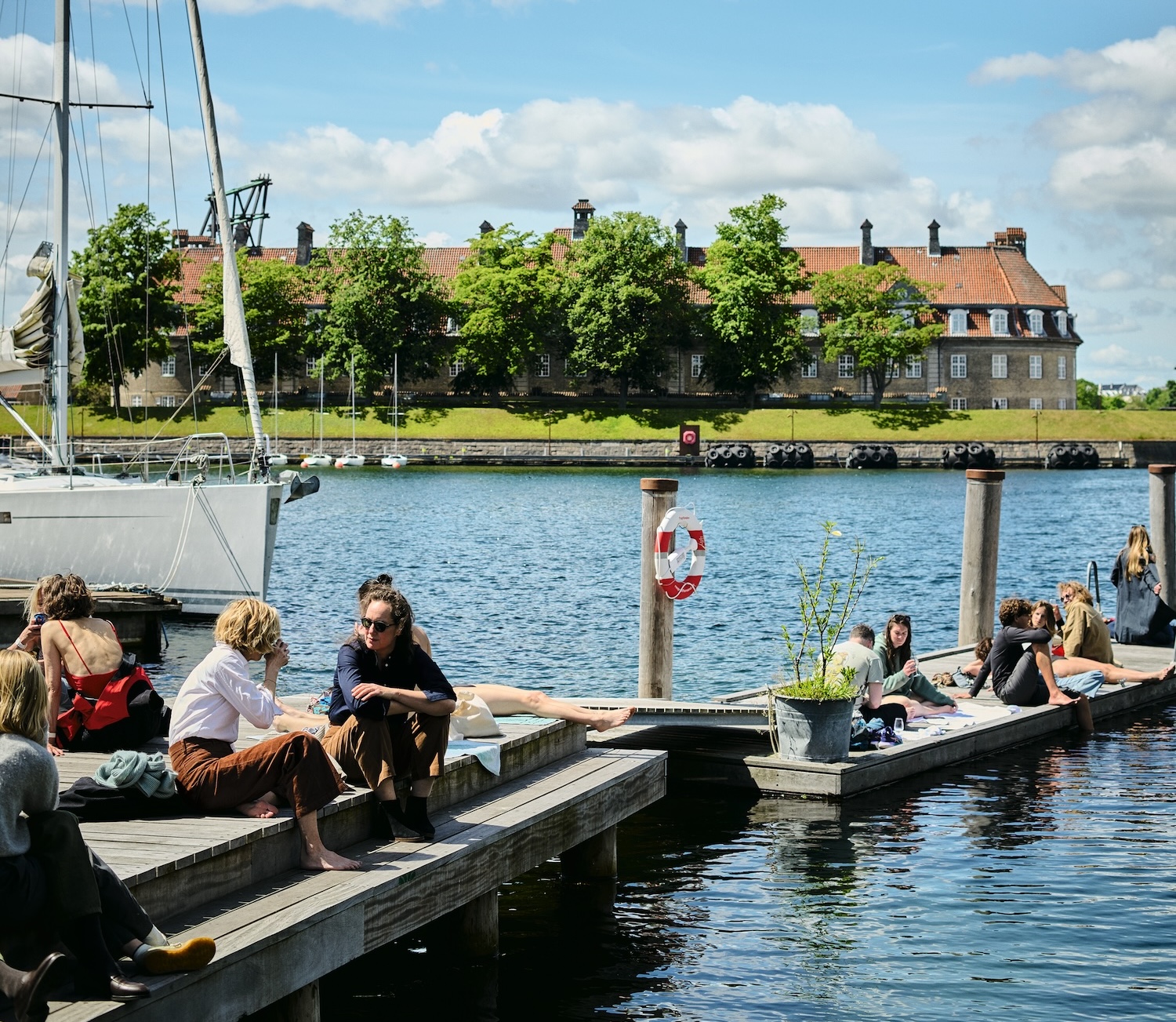
There’s a version of eating well that has nothing to do with optimization. No tracking, no rules, no guilt—just good ingredients, cooked simply and shared with people you love. That’s what drew me to Scandinavian Everyday, the new cookbook from chef Nichole Accettola, who spent 15 years living in Denmark before bringing that way of eating back to San Francisco, where she now runs the beloved Kantine.
The Nordic diet—the framework at the heart of the book—sounds deceptively simple: whole grains, seasonal produce, fish, dairy, and very little of the processed stuff. But what makes it feel so aligned with the way I want to live isn’t the food list. It’s the philosophy underneath it. The idea that a meal is worth slowing down for. That dinnertime can stretch to an hour. That breakfast on a weekday can be just buttered bread and good coffee, and that’s enough to still feel like a celebration.
Below, I’m sharing an excerpt from the book—Nichole’s introduction to the Nordic diet and her deeply personal essay on porridge—followed by a recipe for her Sweet 3-Grain Porridge with Pear, Date-Walnut Butter, and Crispy Buckwheat. Consider it your invitation to make something worth lingering over this weekend.
The following is excerpted from Scandinavian Everyday by Nichole Accettola, published by Ten Speed Press.
Nichole Accettola
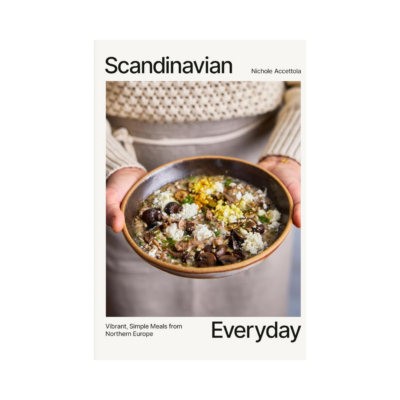
Scandinavian Everyday: Vibrant, Simple Meals from Northern Europe
The Nordic Diet
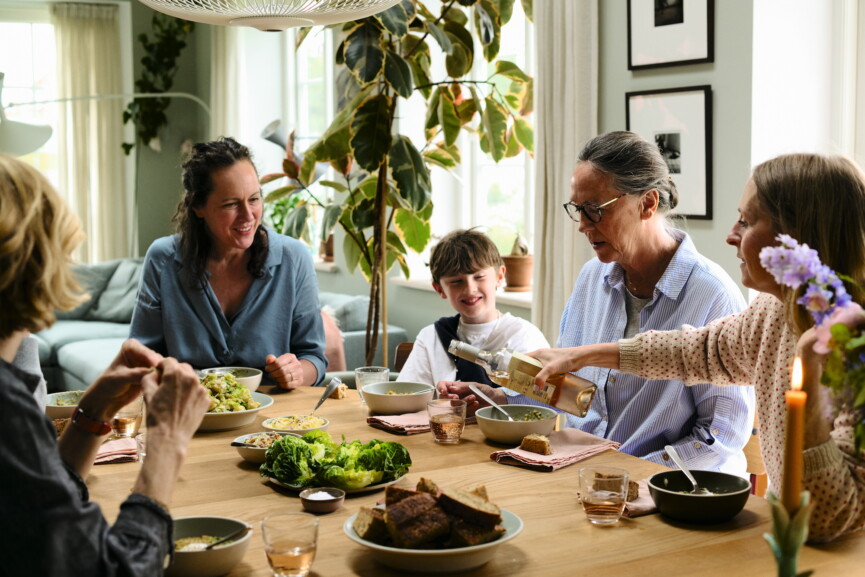
Have you ever been on a trip somewhere far away and fallen in love with the foods eaten there or the way that people eat together? I simply adore immersing myself in other places, and frankly, those experiences are some of the best souvenirs I’ve brought back with me. They enrich my life, put my own way of living in perspective, and sometimes inspire change in our food habits after we’ve returned home. I’ll never forget the look on my kids’ faces when I suggested we extend dinnertime to at least an hour for more relaxation and conversation (and the idea of serving a salad course after the main meal was equally unpopular).
Little did I know when I first moved to Denmark that, within a few years, New Nordic cuisine—an approach to cooking that prioritizes local, sustainable, and seasonal ingredients prepared in innovative ways—would emerge, transforming Scandinavia into the culinary hub it is today. This movement not only elevated Nordic cooking globally but also gave rise to the Nordic diet. And while the word “diet” often signals weight loss, this diet is about something else entirely—choosing to eat well with foods rooted in the region’s traditions, and shaped with an ecological bent.
While I don’t follow the Nordic diet strictly, the general principles are always top of mind for me. Rooted in principles similar to the Mediterranean diet, the Nordic diet emphasizes plant-based eating supplemented by other whole foods. The way to eat is broken down into a simple framework:
Eat most often:
- Plant-based staples: vegetables, fruits, berries, legumes, and potatoes
- Grains and seeds: whole grains like buckwheat, millet, and barley, as well as nuts and seeds
- Seafood and dairy: fish, seafood, low-fat dairy products, and eggs
- Fats and flavorings: canola oil, herbs, and spices
Eat in moderation:
- Cheese, cultured dairy products like yogurt, and game meats
Eat rarely:
- Other red meats and animal fats
Avoid or eat very rarely:
- Foods with added sugar, processed meats, sugar-sweetened beverages, refined fast foods, and artificial additives
The beauty of the Nordic diet lies in its simplicity and its focus on seasonality. Food that’s in season and grown close to where you live isn’t just more sustainable—it tastes better. Indeed, the diet highlights Nordic food traditions derived from century-long practices of harvesting from the earth, the sea, and the forest. Many of those ingredients were preserved to last through the frigidly cold winter months; therefore, techniques such as smoking, curing, and drying have shaped the region’s cuisine.
The recipes in this book are inspired by the Nordic approach to food but meant to be adapted in other parts of the world, where lingonberries and lovage are impossible to find. With the principles of the Nordic diet as your guide, you can create nourishing, seasonally driven meals with ingredients that are in sync with your area.
Eating well is vital to staying healthy, but it’s just one part of the equation. In Scandinavia, nourishing food combined with a sound work–life balance, social involvement in a community, and a strong connection to nature are key to holistic well-being and fundamental aspects of the Nordic diet.
Bowl Me Over
On weekdays in Scandinavia, breakfast is normally simple and quick. A cup of coffee or tea, a few slices of buttered bread topped with meat or cheese, or a bowl of yogurt. And for those who prefer going to the local bakery, a BMO (bolle med ost, or buttered bun with sliced cheese) on the way to work is a perfect grab-and-go item.
And then there are the weekends. When I lived in Copenhagen, my family and I would often take advantage of the leisurely mornings and make porridge for breakfast at least once during the weekend.
When I was growing up in Ohio, porridge was synonymous with sugary instant oatmeal from a pouch. For some others I know, the word porridge conjures images of thick, pasty gruel that seems more suited to hanging wallpaper than for eating. But it doesn’t have to be that way. In my opinion, porridge just doesn’t get the credit it deserves.
When my partner and I became parents, we began making simple porridges using wholesome grains and toppings, which felt perfectly fitting as our children’s first foods. As our kids grew, so did our fondness for porridge—most often enjoyed as a family, eventually becoming a set weekend tradition with a big, steaming pot for everyone to enjoy.
Around 2010, a porridge renaissance began stirring in Scandinavia, and luckily, I was living there at the time. I remember the buzz around the opening of the first “porridge bar,” called Grød, in Copenhagen—suddenly, people were standing in long lines just to get their hands on a bowl of it.
This may be the shortest chapter in the book, but possibly the one with the most potential. Once you start making these bowls, you might feel more inclined to riff on a porridge yourself—tweaking and improvising to create something uniquely yours. It’s bound to change your mind completely about what porridge can be.
Print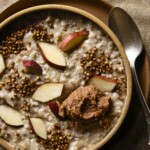
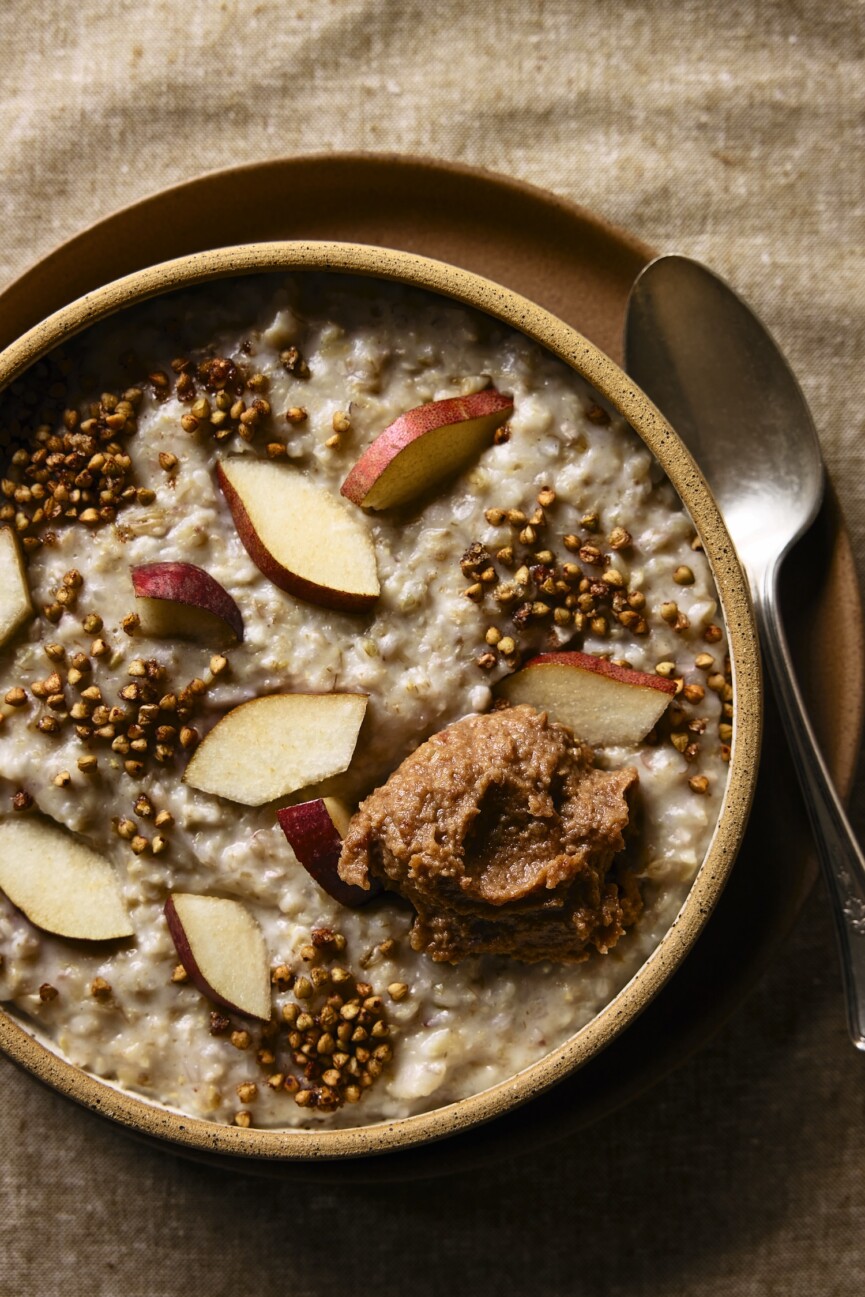
Sweet 3-Grain Porridge with Pear, Date-Walnut Butter, and Crispy Buckwheat
- Yield: 4 servings 1x
Description
This porridge is a mix of buckwheat and two different kinds of oats: groats and flakes. If you’re wondering, groats (sometimes referred to as “berries”) are whole grains that have had the inedible hull removed. Grains in this form are extremely nutritious and give porridge such a satisfying chew. If it’s not pear season, use any other ripe fruit you have on hand; this base works any time of year with all kinds of toppings.
Often, I’ll make the porridge base at the beginning of the week, eat one portion, and then refrigerate the rest to
have breakfast sorted for a few days. I reheat the base with a splash of milk or water, either in the microwave or a saucepan. Easy peasy. And if you ever have leftover sweet porridge, I urge you to make Leftover Porridge Cakes with Cardamom, Skyr, and Crushed Red Berries (recipe in Scandinavian Everyday).
Ingredients
For the Date-Walnut Butter:
- 5 ounces (140 g) dates (preferably Medjool), pitted
- 1 cup (240 g) water
- 1/2 cup (43 g) walnuts
- 1/2 teaspoon vanilla extract
- Pinch of kosher salt
For the Crispy Buckwheat:
- 1/2 cup (90 g) buckwheat groats
- 1 teaspoon neutral oil, plus more for greasing
- 2 teaspoons sugar
- 1/2 teaspoon ground cinnamon
- Pinch of kosher salt
For the Porridge Base:
- 1 cup (190 g) oat groats
- 1 cup (105 g) old-fashioned rolled oats
- Pinch of kosher salt
- 1 tablespoon unsalted butter
- 1 tablespoon runny honey
- 2 ripe but firm pears (preferably d’Anjou or Bosc), cut in quarters, then into 1/4-inch (6 mm) slices
Instructions
- Make the date-walnut butter. In a small saucepan, combine the dates, water, walnuts, vanilla, and salt. Cover the pan and bring to a boil over high heat. Decrease the heat to low and simmer gently until the dates are very soft, about 8 minutes. Pour ½ cup (120 g) of the cooking liquid into a small bowl and keep it close by-you’ll use it to adjust the consistency of the butter. Pour the rest of the contents from the pan into a blender. Blend until completely smooth, adding as much of the reserved liquid as necessary to get things moving around well. The ideal consistency should be similar to that of Greek yogurt. Transfer to a bowl and set aside until the porridge is ready or refrigerate in an airtight container for up to 4 days before serving.
- Make the crispy buckwheat. Put the buckwheat groats in a small saucepan and add water to cover by about 1 inch (2.5 cm). Bring to a boil over high heat and boil for 3 minutes. Drain, discarding the cooking water, then rinse the buckwheat briefly with cold water. Spread out on a baking tray to cool. When cool, set aside ¼ cup (38 g) for your porridge base. Preheat the oven to 350°F (175°C). Lightly oil a 13 by 18-inch (33 by 46 cm) baking tray. In a small bowl, stir together the remaining cooked buckwheat with the 1 teaspoon oil, the sugar, cinnamon, and salt. Spread out on the prepared tray and bake, rotating the tray and giving it a stir halfway through, until the buckwheat is dry, 30 minutes. (The buckwheat gets crispier as it cools, so don’t look for that as a sign of doneness.) Let cool completely before transferring to an airtight container. The crispy buckwheat can be made in advance and stored at room temperature for at least 1 week.
- Make the porridge. Put the oat groats in a medium saucepan and add water to cover by about 2 inches (5 cm). Bring to a boil over medium-high heat, then decrease the heat to medium and simmer gently for 15 minutes. Pour in the oats and the reserved parboiled buckwheat. Add a touch more water, if necessary, to keep the porridge loose and prevent scorching on the bottom of your pan. Decrease the heat to low and simmer for 15 minutes more. Check for doneness by ensuring that the grains are soft and the oat groats are tender in the center but still have a chewy texture. (If you aren’t going to be serving all the porridge at once, prepare it to this point and spread out the amount to be stored on a baking tray to cool quickly. Once cool, store in an airtight container in the refrigerator for up to 4 days and reheat as needed.)
- To finish the porridge, stir in the salt, butter, and honey and give it a final taste. The aim is to make a porridge that is not overly sweet, has a good balance of salt (without tasting salty), and is ever so comforting to eat, even without the toppings.
- Divide the porridge among four bowls. Arrange the pear slices on top, spoon the date-walnut butter off to one side, and sprinkle the crispy buckwheat on top. Serve immediately.
“Scandinavian Everyday” Copyright © 2026 by Nichole Accettola. Food photographs copyright © 2026 by Molly DeCoudreau. Lifestyle photographs copyright © 2026 by Mikkel Vang. Published by Ten Speed Press, an imprint of the Crown Publishing Group, a division of Penguin Random House LLC.
More from this issue

How to Make Your House Feel Like Summer
Let the sunshine in.

When the Dream Life I Wanted Wasn’t Actually For Me
Burnout was just the beginning.

Leanne Ford & Grace Mitchell on Following the Feeling
“Let it live and be lived in.”

