





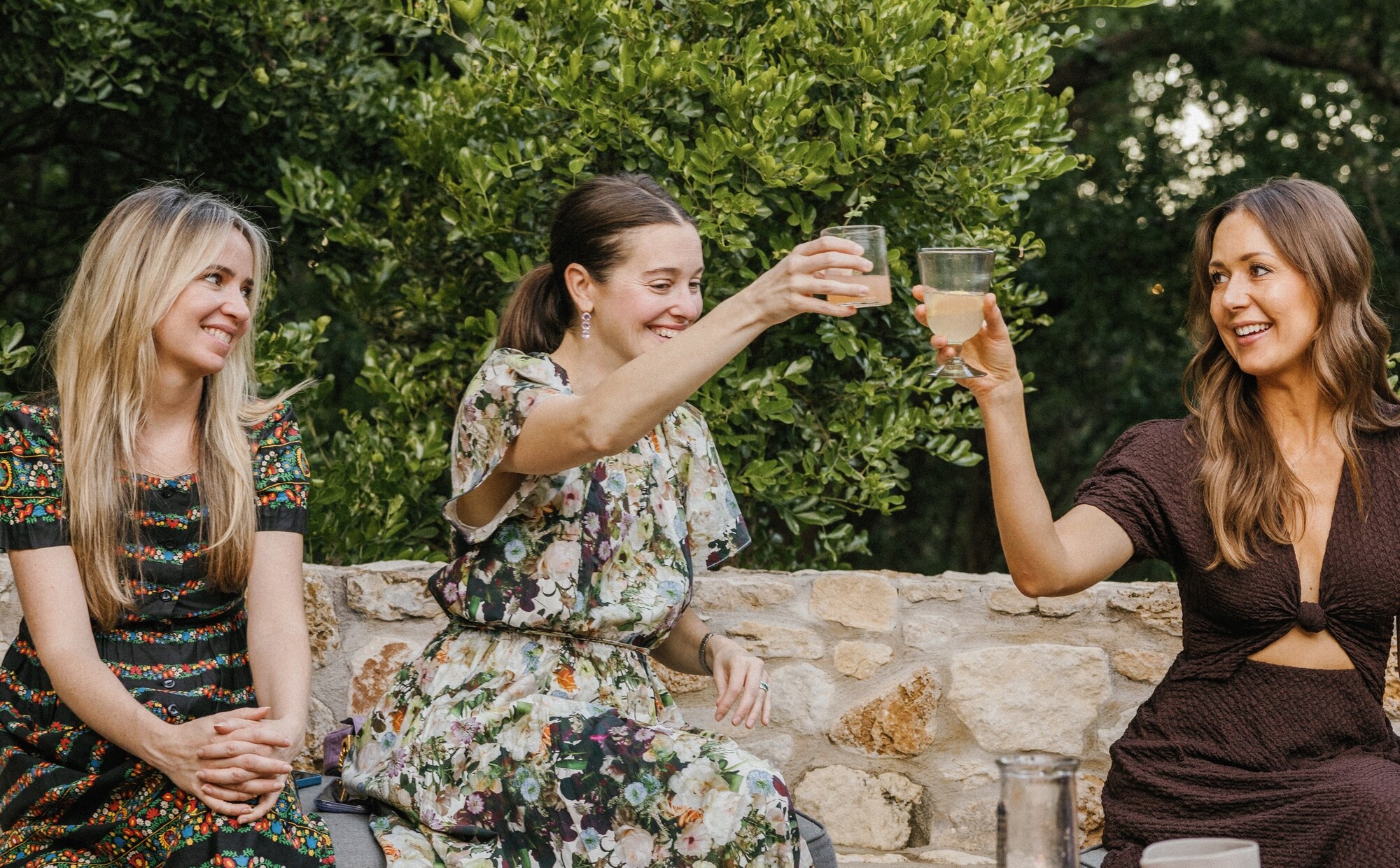
Photography by Michelle Nash
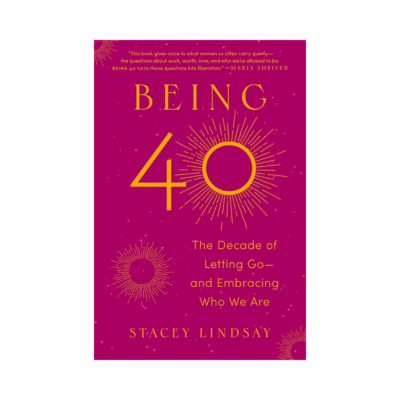
There are books that arrive at the right moment, and then there are books that feel like they were written specifically for you. For the questions you’ve been carrying, the narratives you’ve been trying to outgrow, and the version of yourself you’re still becoming. Stacey Lindsay’s Being 40: The Decade of Letting Go—and Embracing Who We Are is that kind of book.
I first knew Stacey as a colleague. She was our design editor here at Camille Styles, and I had the privilege of working alongside her. I say privilege deliberately, because editing Stacey’s work always felt like the wrong word for what was actually happening. Her perspective was so clear, so honest, and so beautifully radical that I often felt I was the one learning something. That hasn’t changed.
Stacey Lindsay on Being 40: The Decade of Letting Go—and Finally Saying Yes
Being 40 is Stacey’s first book, and it is exactly what she is: warm, rigorous, deeply human, and unafraid. Through conversations with experts, candid interviews with real women, and her own unflinching journey, she dismantles every reductive story we’ve been handed about what this decade is supposed to look like. And she replaces it with something far more interesting: the truth.
The Moment That Asked for a Book
Stacey turned 40, experiencing what she describes as “a kaleidoscope of feelings—excitement, yearning, rage, confusion, awe, sadness, eagerness, surprise, elation, grief.” She felt, in some ways, behind—as if she hadn’t completed the things a woman was supposed to have done by this age. And she felt something else too: a deep, primal desire to interrogate the narratives crowding her mind and finally let them go.
So she started asking other women about their 40s. What she found stopped her in her tracks.
“Whoa, I am not alone,” she realized. The 40s, she discovered, are a decade of massive change and personal evolution—complex, expansive, and wildly underrepresented. Once she saw it, she couldn’t unsee it. The book became inevitable.
What It Actually Takes to Make Something
The book took several years to write, and Stacey is refreshingly honest about what that required. Not discipline in the punishing sense, but something more nuanced: a continual commitment to believing the work deserved to exist.
“Staying with this book took a daily practice of letting go of the story that I wasn’t worthy to write it,” she shares. It required recognizing her inner critic, moving beyond it, and finding strategies that allowed her to show up consistently—including a commitment to give the book her very first attention in the morning, before meetings or any other work, at least four days a week.
What she also pushes back on is the romantic myth of how creative work actually gets made. “I experience writing as a more textured and varied experience that requires management and malleability—and I believe it is this way for most, if not every, person.” Some days that meant typing paragraphs. Others, re-reading and editing. Others still, scribbling ideas by hand or sitting with the feeling of a chapter. All of it counted.
It’s an invitation she extends to anyone with a creative project of their own: do a self-inventory. Ask yourself what circumstances underscore your clearest work. Then, make good decisions for your creativity, so you can actually show up for it.


What Honesty Required
Writing honestly—about her own life, her own messiness, the not-so-flattering parts—didn’t come without resistance. Stacey had to move through the fear that sharing herself so fully would read as self-indulgent, or that people simply wouldn’t like her for it.
What helped was trust. Trust in her editor, Cassidy, who guided her to share more of herself, wholly in her own voice. And trust in the reason she was writing in the first place.
“I hope that in moving beyond any hiding and leaning into depth and truth, it will encourage another woman to know she’s never alone in her personal messiness and questions,” she says, “and to share more of herself, be it in her journal or with a dear companion.”
That’s the promise at the heart of Being 40—not answers, but connection. The reassurance that whatever you’re carrying, someone else has carried it too.
Stacey Lindsay
What the 40s Actually Are
For too long, the story around turning 40 has been one of decline. A tipping point, a closing door, a decade defined by what’s no longer possible. Stacey spent years absorbing that story without questioning it. Then she started listening differently.
“Turning 40 and being in this decade is a time of massive self-evolution, clarity, and radical self-knowing,” she says. “Women are starting, ending, changing, letting go, and doing things in this decade at an incredible velocity.” More women are single. More are waiting longer to marry, or not marrying at all. More are initiating divorce, having children later, or choosing not to have them. More are in relationships with other women. The realities of women’s lives in this decade, Stacey found, are far-reaching and eclectic—and nothing like the story we were handed.
“Turning 40 and being in this decade is a time of massive self-evolution, clarity, and radical self-knowing.”
She also discovered something she hadn’t expected: an archetype that gave language to what she was feeling. The Autumn Queen—a concept she learned about from women’s coach Steph Jagger—represents the fierce, wild, radically individual energy of women in their 40s. “I let my Autumn Queen lead me all the time now,” Stacey says. “She is there, fully confident, in all of us.”
There Is No Timeline
Perhaps the most liberating idea in Being 40—and the one Stacey returns to with the most conviction—is this: you are never too late.
“We can be late for dinner reservations, but not the creative force in our lives,” she says. The feeling of being behind, of having missed some invisible window, is—as she puts it plainly—a product of an old patriarchal story. One we’ve been handed and never questioned. One that doesn’t belong to us.
“You are never too late to explore a yearning inside you,” she says. “I promise you.”
But Stacey is careful to distinguish between releasing false timelines and surrendering urgency altogether. Because she also feels—deeply, insistently—the pull to live fully, right now. Not because she’s behind. Because she’s here.
“Let us all urgently say yes to our own path.”
It’s the kind of sentence that lands somewhere in your chest and stays close to your heart. And it might be the most essential thing Being 40 has to offer: not a roadmap, not a checklist, but a call. To trust the yearning. To stop waiting for permission. To choose, finally and deliberately, what’s actually true for you.
Being 40 Is Just the Beginning
Being 40 is many things at once: a reported book, a personal reckoning, and an invitation to every woman who has ever felt the gap between who she is and who she was told she should be by now. It is, above all, an act of generosity—Stacey’s willingness to go first, to say the uncomfortable thing, to sit in the uncertainty long enough that other women don’t have to feel so alone in theirs.
Having worked alongside Stacey, I can tell you that the book is exactly who she is. Rigorous and warm. Honest without being self-indulgent. The kind of writing that makes you feel, somehow, both seen and braver.
Whatever decade you’re in, whatever you’re carrying, whatever creative yearning has been knocking—this book is worth your time. Not because it has all the answers. Because it asks all the right questions.
Being 40: The Decade of Letting Go—and Embracing Who We Are is available now.
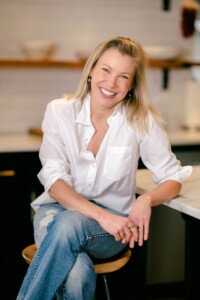
Stacey Lindsay is a multimedia journalist and the author of BEING 40: The Decade of Letting Go—and Embracing Who We Are. Known for her empathetic approach, she’s interviewed hundreds of influential public figures about spirituality, health, civics, politics, women’s equality, and more. Her work has appeared across global media platforms. A senior editor at The Sunday Paper, she was previously an editor at goop and a TV news anchor and reporter. She earned a B.A. in media studies from Emerson College and an M.A. in journalism from the University of Colorado at Boulder.
More from this issue

A New Chapter in the English Countryside
The Shabby Chic founder on intuition, imperfection, and coming home to herself.
The New Dream Body
What it means to feel well, alive, and at home in yourself this summer.

How to Dress for the Life You Want to Live
Stop saving your favorite outfits for someday.

