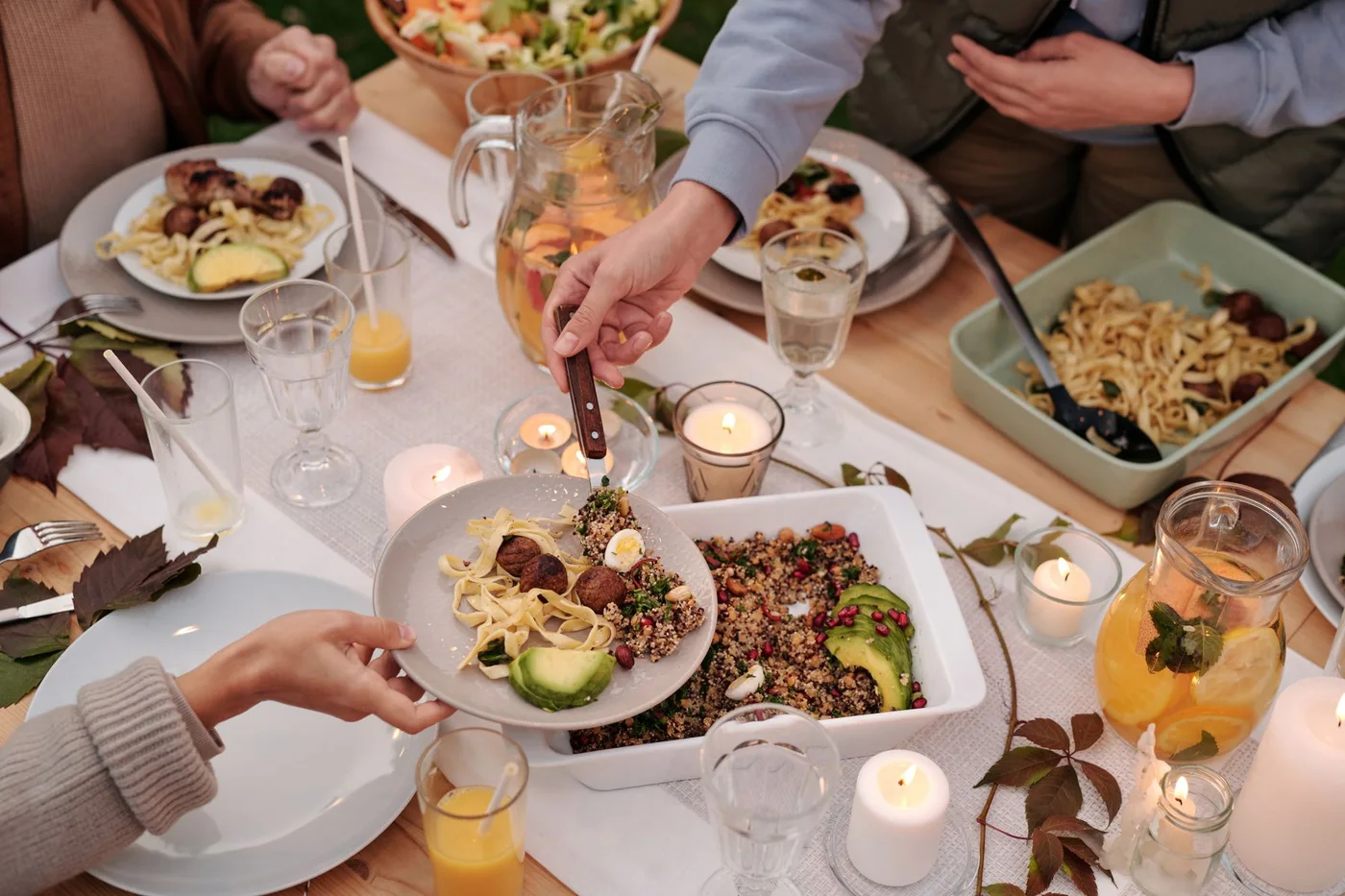
Friends share pasta, salad and drinks around a warmly lit dinner table.
Choose the evening first
Dinner for four fits around a working day when the plan leaves you time to enjoy it. Decide arrival and meal times, then assess your realistic preparation window. Ask about allergies and dietary requirements before shopping. Do not promise allergen-free food unless you can meet the guest's needs and properly avoid cross-contact; discuss uncertainties directly.
Choose a main dish you know, a straightforward side and dessert requiring little final attention. Pasta with a suitable sauce, salad and fruit or a purchased dessert can be enough. Adapt the menu to guests rather than assuming a vegetarian option covers every requirement. Check serving quantities from the recipe and consider appetites and the number of courses.
Work backward from dinner
Write a short preparation sequence. Set the table before cooking gets busy, prepare suitable cold components and leave the active final task close to serving. Include chopping, resting and oven preheating in the schedule. If dishes need the same pan or conflicting oven temperatures, resolve that before guests arrive instead of improvising under pressure.
For a seven o'clock meal, table setting and ingredient preparation might happen earlier, with salad assembly and the hot dish completed nearer dinner. Follow recipe timing and safe storage needs. Refrigerate perishables appropriately rather than leaving everything out to make the kitchen look ready. A calmer schedule still has to respect cooling, storage and reheating requirements.
Leave room on the table
Place four settings before decorating. Check chair movement, glass stability and access to water. Low decoration allows conversation without obstacles. If using candles, position them safely away from textiles and other hazards; battery lights are an alternative. Strong scents can compete with the food, so a simple unscented arrangement may be more comfortable.
Serve large dishes from a nearby surface when the table is small. A cloth can connect mismatched plates without requiring another set, provided settings remain steady. Use existing glasses unless a drink truly needs something different. The table's job is to support passing food and talking, not to display every attractive serving object you own.
Keep time for being a host
Have water available on arrival and offer a straightforward first drink. Alcohol is optional, and a considered nonalcoholic choice belongs beside the other options. Keep a small task available if someone offers help, such as carrying bread, but do not make assistance necessary for dinner to happen. Set a serving spoon beside each prepared dish.
When the main course is ready, sit down. Clear only what is necessary between courses and postpone the full washing-up. Store leftovers promptly following appropriate food-safety guidance. Later, note useful observations: the portion size, missing utensil or dish demanding too much attention. These details improve the next dinner more effectively than simply choosing a more impressive menu.
A quick decision guide
| Approach | Advantage | Consideration |
|---|---|---|
| One-pan main | Fewer cooking vessels | Oven capacity |
| Pasta and salad | Familiar preparation | Active final cooking |
| Make-ahead main | More guest time | Safe storage and reheating |
Shop for several future dinners
Inventory plates, glasses and serving utensils first. Four usable settings and one practical serving bowl may cover many menus. Measure storage and check cleaning requirements. Borrowing an occasional extra chair or large pot can make more sense than allocating permanent space. Avoid buying a specialized piece solely because it appears in a styled table photograph.
Budget for the entire meal, including drinks, herbs and small ingredients. Check cupboards to prevent duplicates. For kitchen recommendations, prioritize repeated tasks and fit with your sink, hob and storage. A suitable pan, dependable knife or washable cloth can be useful; a gadget should earn its space through realistic use. Food, comfort and company do not require a coordinated shopping haul.
A few useful answers
Do I need matching dinnerware?
No. Enough comfortable settings matter more. Repeated glass shapes or a simple cloth can create visual continuity.
How can I avoid cooking all evening?
Choose a familiar menu with one active final task. Prepare suitable components ahead and avoid equipment conflicts.
Published and updated October 10, 2026. Have a correction or a useful question? Contact the journal.