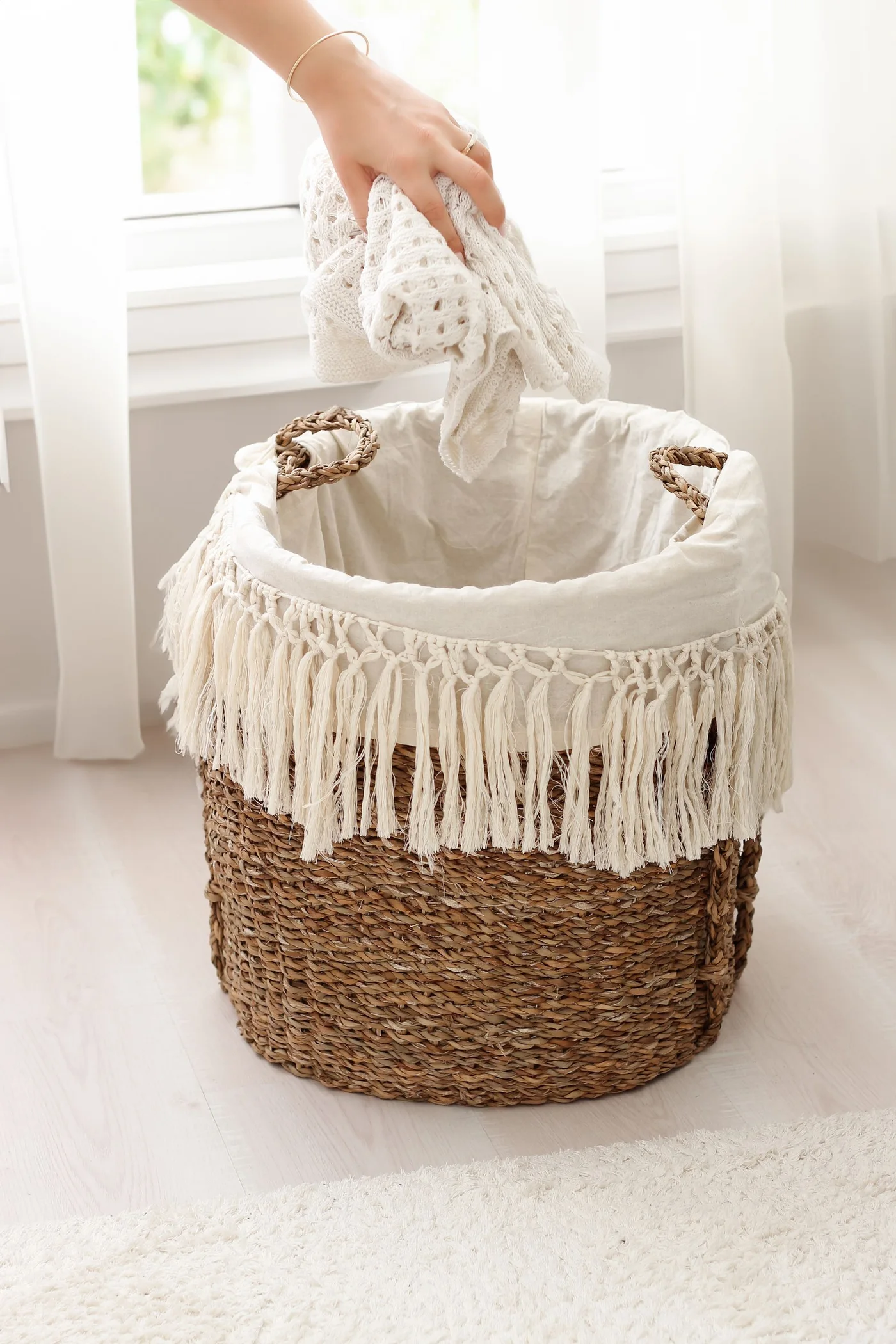
A laundry basket provides a place to sort textiles before washing.
Sort by construction
A shirt, lined jacket and napkin may share a fiber name but need different treatment. Start with each care label. Dyes, finishes, trims and lining influence the appropriate method, so a general linen rule should not override manufacturer instructions. Photograph a label that may fade or need removing, and retain any additional care guidance supplied with the item.
Separate colors and assess delicate construction. Lightweight blouses should not rub against rough fastenings. Check pockets and follow instructions about closures or turning garments inside out. Sorting before the machine fills reduces the temptation to choose a convenient cycle for everything. A basket is useful only if the categories stay clear when you come to load the wash.
Treat marks thoughtfully
Identify the mark if possible. Oil, makeup and coffee can require different approaches, and a treatment suitable for white table linen may not suit a dyed shirt. Follow the cleaning product's directions and test compatibility when advised. Avoid combining products or experimenting with stronger mixtures; more treatment is not automatically a better solution.
Handle the fabric gently rather than scrubbing aggressively. If a garment requires dry cleaning, tell the cleaner what caused the mark and mention any previous treatment. Inspect washable items before drying, because further heat can make some marks harder to address. Expensive garments and unfamiliar stains are reasonable cases for professional advice instead of repeated home experiments.
Give the wash space
Use the cycle, temperature and detergent guidance appropriate to the item. Overloading can interfere with cleaning and leave textiles tightly creased. A laundry bag may protect a delicate piece when machine washing is permitted; it does not make an unsuitable cycle safe. Measure detergent according to product directions and machine requirements rather than estimating generously.
Remove the load promptly. Reshape seams gently and dry as directed with sufficient airflow. If tumble drying is allowed, use the specified setting. Do not assume a blend behaves like pure linen or that every new item will shrink by the same amount. Construction and previous textile treatment matter, so build the routine around the garment rather than a universal percentage.
Choose the finish you prefer
Creases can suit relaxed clothing and an informal table. For a smoother appearance, follow the permitted ironing temperature and any guidance about dampness, reverse-side pressing or a protective cloth. Pay attention to prints and trims. Check steaming suitability too; refreshing a piece does not replace washing when it is dirty.
Store textiles fully dry with enough room to avoid tightly forced folds. Fold table linens consistently so sets are easy to locate. Hang suitable shirts or fold them according to space and construction. Secure loose buttons and repair open seams before another wash enlarges the problem. Small maintenance tasks can preserve usefulness without making laundry an elaborate ritual.
A quick decision guide
| Item | Starting point | Complication |
|---|---|---|
| Shirt | Individual care label | Dyes, blends and fastenings |
| Napkins | Color sorting and stain identification | Food marks |
| Lined jacket | Professional-care instructions | Different lining requirements |
Consider laundry before purchase
Read care details before buying. A washable shirt may suit frequent rotation, while structured tailoring can require another budget and schedule. Check composition, lining and garment measurements. Allow comfortable fit rather than hoping washing will improve a tight garment. If a retailer omits care information, request it before purchasing an unfamiliar textile.
For household linen, measure the table and desired overhang. Check set quantities and whether replacements are available separately. A visible weave or premium price does not prove durability. Clear specifications and a maintainable routine matter more than promises of permanent crispness. A fabric you enjoy in its natural relaxed state may also reduce the amount of pressing you want to do.
A few useful answers
Should every linen item be washed cold?
Follow the individual label. Fiber alone does not account for finishes, dyes, lining and construction.
Must creases be removed?
No. A relaxed finish can be intentional. Use only the pressing or steaming methods appropriate to the item if you prefer a smoother result.
Published and updated October 10, 2026. Have a correction or a useful question? Contact the journal.