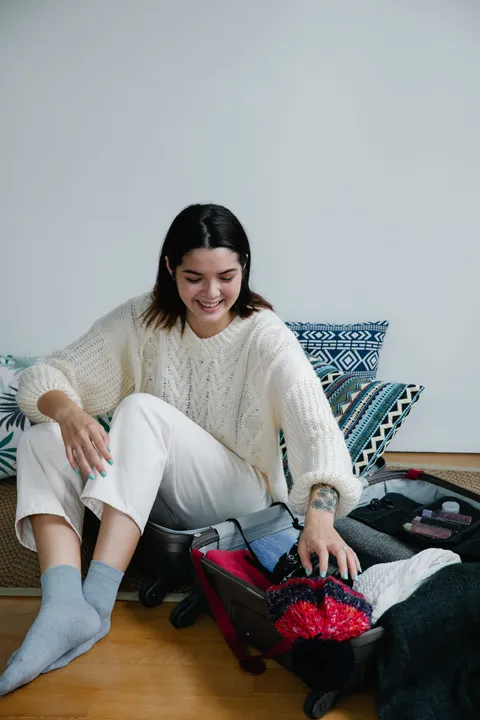

A quiet hotel-room breakfast before a day out.
Give the room a simple layout
Arriving at a hotel often means putting the suitcase down and leaving it open until departure. That works for a night, but modest organization helps on a longer stay. Decide where luggage, daily clothes, and toiletries will live. Use the available storage in a way that keeps walkways clear and follows property guidance. You do not need to fill every drawer. The goal is finding a shirt or charging cable without searching through the whole case. Keep important documents and valuables in arrangements appropriate to the trip and the property's guidance.
Do not scatter important objects across several surfaces simply because each looks convenient. Choose a consistent location for everyday items you need at the door, such as a room key and day bag. If sharing, agree on which shelves or wardrobe areas each person will use. This small conversation prevents considerable rummaging.
Unpack by frequency of use
Hang pieces that benefit from it, following care labels, and leave simple folded items in a cube if that makes them easier to manage. A cube can become a removable drawer without transferring every sock onto a shelf. Separate used clothing from clean pieces from the first day. A light laundry pouch takes little space but must suit its contents. Damp items need attention according to their care instructions rather than being sealed away indefinitely.
Lay out the next day's clothes after checking the forecast and plans. A museum morning, outdoor lunch, and hotel dinner may call for layers rather than several full outfits. Put the chosen shoes nearby without blocking floor space. If a garment needs attention, ask about available facilities rather than assuming there is an iron or steamer. Use supplied equipment according to its instructions and the garment's label.
Keep the bathroom kit contained
A toiletry bag that stands open or hangs from an appropriate point can prevent products spreading across a shared counter. Inspect the space before unpacking everything. Keep daily essentials together and put less frequently used items away. If toiletries are provided, decide whether they suit your preferences before opening duplicates. Refillable containers should stay clearly labeled, especially when small bottles look alike. Follow product storage guidance throughout the stay.
Bring products because they belong to your routine, rather than because their travel-sized packaging looks appealing. A short trip rarely requires a new collection of treatments. Keep liquids away from clothes when repacking and check current transport restrictions before departure. A small grooming pouch may be easier to clean than a large structured case, but compare its dimensions with your ordinary contents. The right opening reveals what you need without emptying everything into the sink.
Prepare the morning and the final check
Before bed, confirm the first appointment or booking, save the address, and put the day bag within reach. Decide how breakfast fits the schedule rather than leaving every choice until morning. The breakfast photograph captures one possible travel moment. Availability, opening times, inclusions, and room-service costs depend on the property, so check your actual booking. A calm start often means removing a few decisions rather than purchasing more accessories.
On departure, work through the same zones in reverse: bathroom, wardrobe, luggage area, bedside surfaces, and daily-item landing place. Open drawers you used and inspect outlets and the area around the bed. Follow departure instructions and allow time to settle charges. Keep the laundry pouch separate from clean garments. At home, note whether organization truly needed a new purchase. Often the existing kit works when each object has a straightforward destination. A routine is most useful when it remains easy to repeat.
A quick decision guide
| Option | Useful for | Consider |
|---|---|---|
| Packing cube | Move folded items together | Visibility and opening |
| Hanging washbag | Limited counter space | A suitable hanging point |
| Laundry pouch | Separate used clothes | Care and contents |
Before you buy
Choose an organizer only after identifying a repeated difficulty. Check open dimensions, visibility, closures, and cleaning instructions. Avoid adding weight for rarely used features; a simple pouch can be enough for a short stay.
A few useful answers
Is unpacking worth it for one night?
Use a minimal version: toiletries, tomorrow's clothes, and one place for essentials. Leave other items in the case.
Must organizers match?
No. Different pouches can be easier to recognize and may already fit your packing needs.
Published and updated October 10, 2026. Have a correction or a useful question? Contact the journal.