
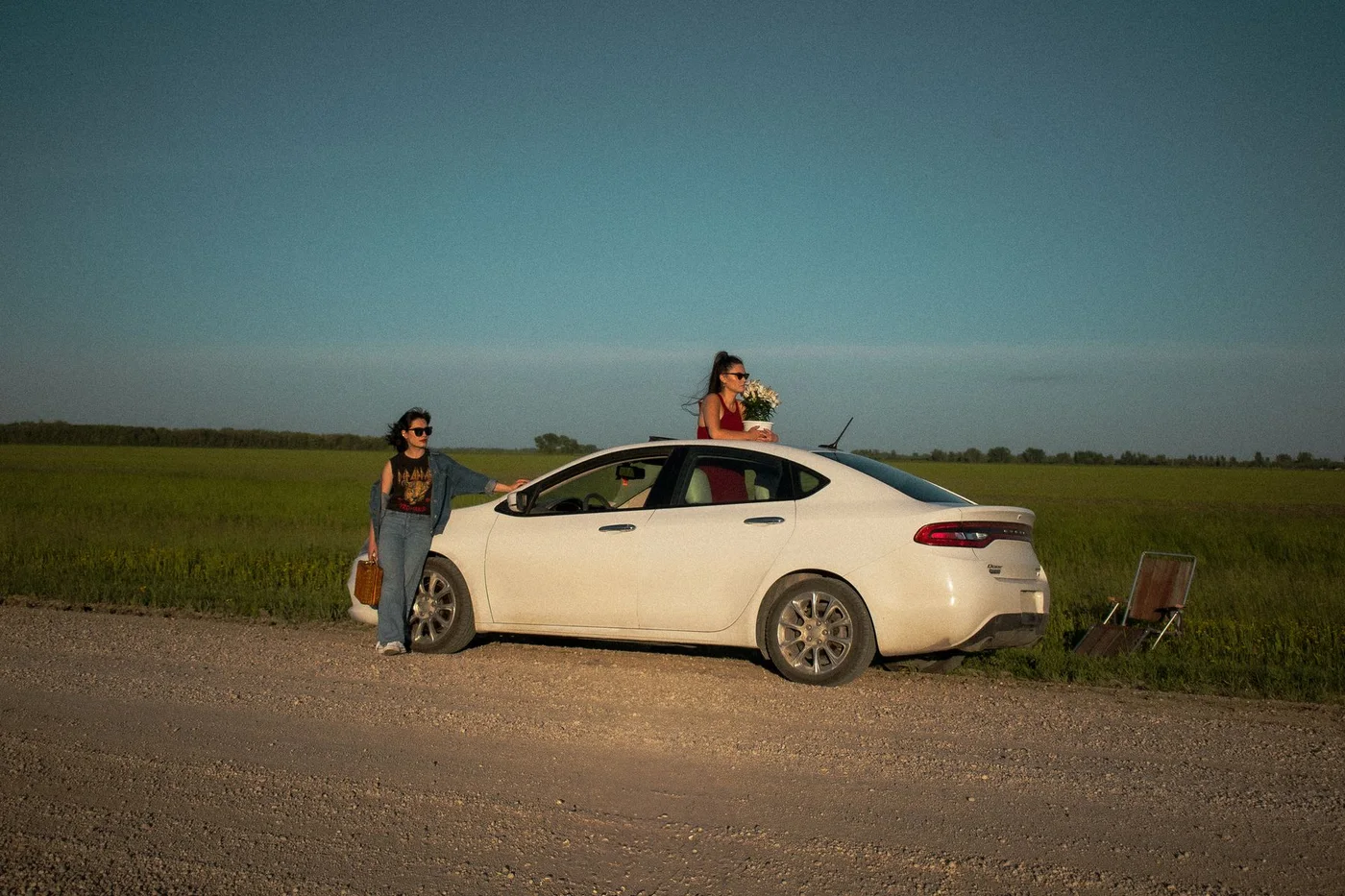
A countryside stop beside a white car.
Pack around the route
A weekend on the road usually includes more than driving: a coffee stop, a countryside walk, an overnight stay, and lunch in an unfamiliar town. Write down these moments before loading the car. Things needed during a stop belong in a day bag, while overnight clothes can remain in separate luggage. Keep the overall load manageable and follow vehicle guidance for carrying and securing belongings. This guide concerns personal packing rather than vehicle preparation or driving advice.
Check the route, reservations, weather, and relevant travel requirements through current official sources. Vehicle checks and specialist equipment decisions belong with manufacturer instructions or qualified professionals. The photograph illustrates friends on a trip rather than a claim about any car accessory. Begin ordinary packing with the belongings you already use on outings: a layer, bottle, appropriate footwear, and items required by your planned activities. Add something only when it has a clear role.
Create one bag for short stops
A day bag holds objects that would otherwise spread across seats: a jacket, tissues, book, small toiletries pouch, and details for the next booking. Keep documents in a place appropriate to the trip instead of a loose pocket emptied at every cafe. If several people travel together, give each a clear space for personal essentials. Shared packing is easier when everyone knows which bag holds picnic supplies and which contains overnight clothes.
Choose a closed bag comfortable to carry during planned stops. A roomy tote holds layers but can become heavy when filled with everyone's belongings. A compact backpack keeps the load contained, while a crossbody may suit a wallet and phone during a short town visit. The best option depends on the walk, weather, and contents. Color coordination with the car is less useful than access, fit, and the ability to carry the bag comfortably when away from the vehicle.
Make food and drink manageable
Plan snacks around when and where you can eat, with storage appropriate to the food. Follow relevant food-safety guidance and insulated-carrier instructions; insulation alone does not establish safe storage time. Portion items into suitable containers before departure if that makes breaks easier. A container opening neatly on a picnic table may be more useful than a large bag of loose food. Bring a way to collect rubbish and dispose of it responsibly at suitable facilities.
Compare a bottle's closure, capacity, cleaning needs, and fit in your bag. A travel-mug label does not establish compatibility with a vehicle's cup holder, so compare measurements if necessary. Read instructions for intended beverages and temperatures rather than assuming every lid works for everything. Keep refill and meal stops in the route plan instead of carrying supplies for a trip twice as long. Some spare luggage space makes repacking easier after each break.
Think about the journey home
A pouch for used clothing and separate shoe bag prevent the final evening's packing becoming a loose pile. Keep a change available when activities call for it rather than burying every clean garment. Choose layers that share a base outfit so a cool stop does not require changing everything. Keep clothing for a booked dinner together and protect fabrics according to their care needs.
At home, empty the car and bags instead of turning a weekend kit into permanent clutter. Clean containers, launder garments, and return shared items to their usual places. Note what you reached for repeatedly and what traveled untouched. That record is more helpful than a universal list of must-haves. The strongest kit supports the route you took: ordinary belongings arranged so a walk, meal, and overnight stay are easy to manage. It can remain personal, small, and affordable without an unplanned collection of equipment.
A quick decision guide
| Option | Useful for | Consider |
|---|---|---|
| Closed tote | Access to layers at stops | Pouches for little items |
| Compact backpack | Carrying essentials on outings | Fit with actual contents |
| Food carrier | Appropriate food storage | Instructions and storage guidance |
Before you buy
Start with existing containers and bags. For replacements, compare dimensions, cleaning guidance, closures, and carrying arrangements. Vehicle accessories require separate compatibility checks. Ordinary packing needs should not become an unplanned equipment shopping list.
A few useful answers
Should a weekend kit stay in the car?
Unpack food, clothing, and daily items afterward. Follow storage guidance for anything kept in the vehicle.
Is a special organizer necessary?
Only when it solves a recurring problem and suits the vehicle and intended use. Assigned bags may be sufficient.
Published and updated October 10, 2026. Have a correction or a useful question? Contact the journal.