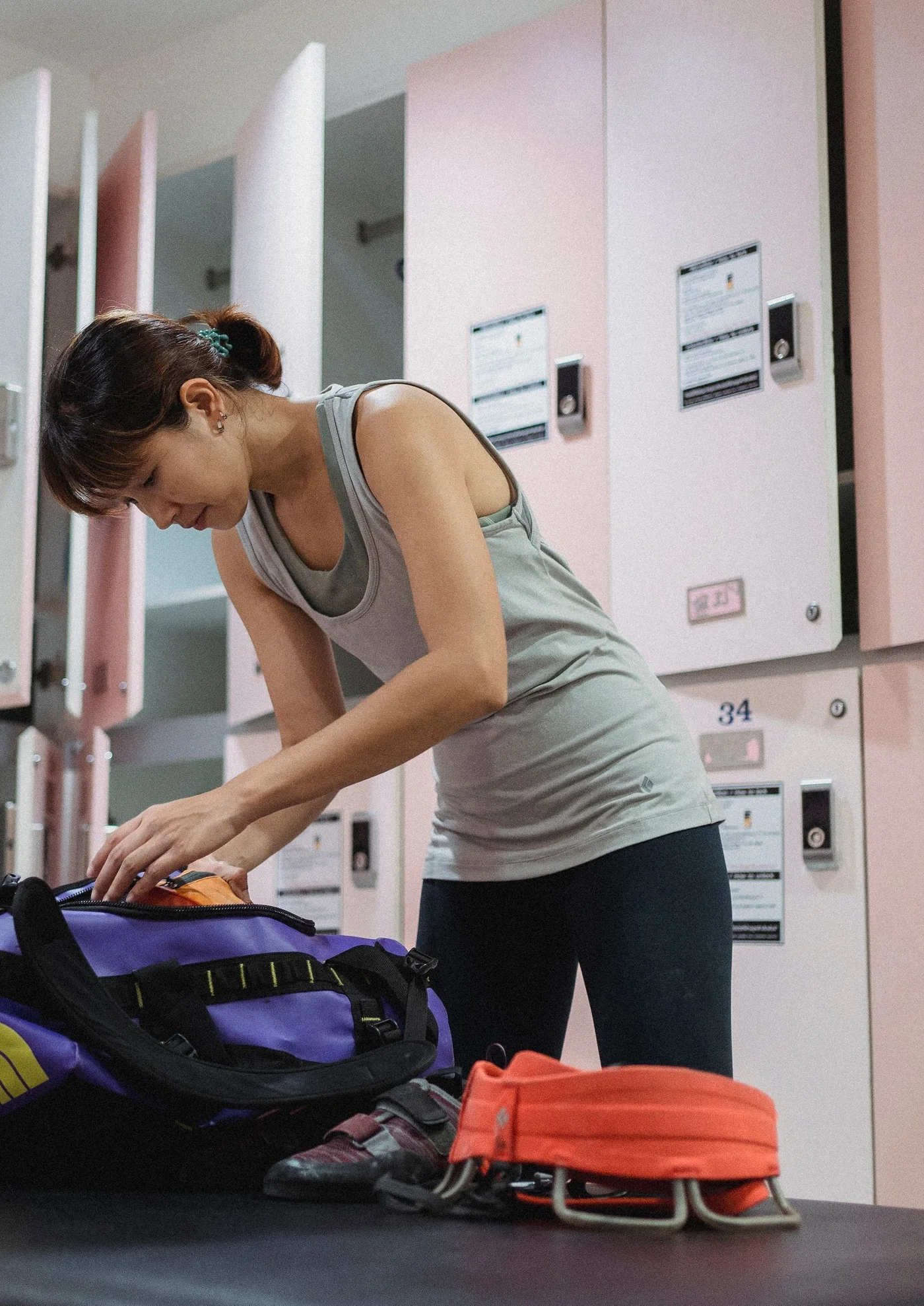
Packing a purple bag in a climbing-gym locker room.
Pack for the transition
A gym bag often does more than carry trainers. Think of a day starting at a desk, including a climbing session, and ending at a casual dinner. The bag must hold activity-specific items, clean clothes, and the small objects that otherwise rattle around the bottom. Begin with an actual packing pile, including the jacket you will wear afterward and a towel if the venue requires one. Capacity becomes clearer when the full day is visible. Measure the largest ordinary item and, if available, check the locker dimensions.
Keep technical equipment decisions separate from bag organization. Climbing equipment must be selected, inspected, and used according to qualified guidance and manufacturer instructions; a packing article cannot establish suitability. The locker-room photograph illustrates a setting, not a recommendation for particular gear. A roomy duffel is less useful when it cannot fit where you need to leave it.
Separate what comes home differently
Use a washable pouch for used clothes and a separate shoe bag when footwear would otherwise touch clean garments. These divisions make unpacking direct. A built-in shoe compartment can reduce the main packing area more than the photos suggest, especially for larger shoes. Look for interior measurements or pictures with the compartment filled. Removable pouches let you change the arrangement for a short class or a longer day, though they add several objects to track.
If you shower at the venue, keep toiletries in a bag that opens wide enough to reveal everything. Carry products you use and follow their storage instructions. Label refillable containers and check their closures. Place the pouch where you can remove it without emptying the main bag onto a bench. Hanging bags are useful only when a washroom offers an appropriate place to hang them.
Choose a carry style for the journey
A backpack leaves your hands free during a walk or transit connection. A duffel often opens more widely on a locker-room bench. A tote may suit a minimal kit but become cumbersome with shoes and a towel. Compare empty weight before advertised capacity, then consider how far you carry your normal contents. Strap width, adjustability, and handle drop matter when the same bag also holds work belongings. Pocket count is less informative than whether the openings suit the objects you carry.
Read cleaning directions for the exterior, lining, and straps; each may require different care. Water-resistant wording does not establish waterproof seams and zips. Use appropriate separate protection for electronics and documents when your journey calls for it. Fewer pockets can be easier to manage when removable pouches have distinct roles, while one accessible pocket is helpful for keys you need at the door.
Make unpacking part of packing
Empty used clothing when you get home and clean or dry items according to their care instructions. Return the bag to a regular place with the next session's essentials beside it. A short note can prevent forgetting things that vary: socks, hair ties, a booking confirmation, or a padlock requested by the venue. Avoid keeping everything packed indefinitely; some contents need laundering, charging, inspection, or replacement.
For an evening afterward, choose clothes that pack compactly and work with footwear you already intend to carry. A simple knit and relaxed trousers may need less room than another elaborate outfit. Place jewelry in a closed case rather than a loose pocket. The aim is an easy transition between plans, with clean garments and necessities visible. Your system can be modest and repeatable rather than a complete collection of matching travel accessories.
A quick decision guide
| Option | Useful for | Consider |
|---|---|---|
| Backpack | Hands-free transfers | Opening width |
| Duffel | Wide access on a bench | Carrying distance |
| Small tote | A minimal kit | Separate pouches |
Before you buy
Try a washable clothing pouch and shoe bag before replacing a main bag with sufficient capacity. Check zipper access, empty weight, care guidance, and return terms. Evaluate the arrangement at home with the actual contents you plan to carry.
A few useful answers
Is a shoe compartment essential?
A removable pouch can provide separation. Compare how either option changes the space available.
Should technical gear remain packed?
Follow its manufacturer's storage and inspection guidance and your qualified activity provider's instructions.
Published and updated October 10, 2026. Have a correction or a useful question? Contact the journal.