Choose a conversation position outside the active task
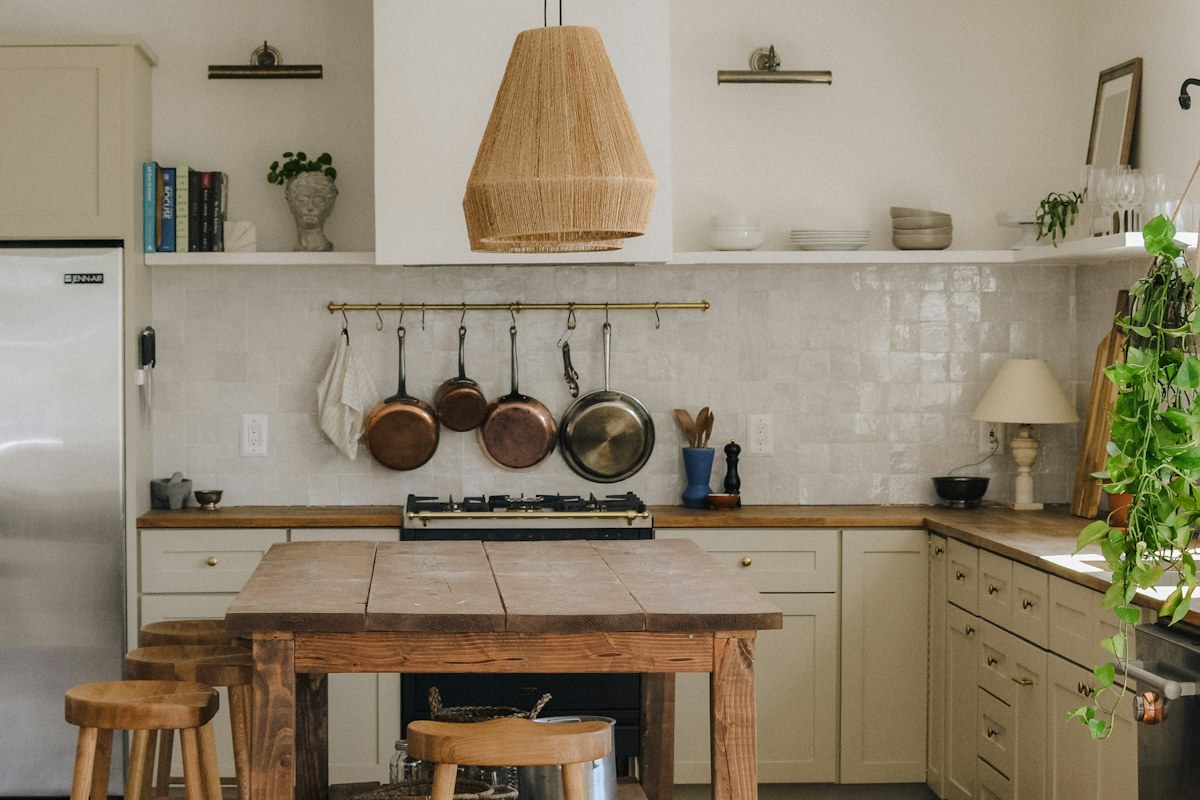
Guests often gather at a kitchen island because that is where the host is preparing food. Before the visit, consider where conversation can happen without occupying the working patch or blocking the route to an appliance. A welcoming position can remain part of the kitchen while being distinct from the actual preparation stage.
Follow the appliances, furniture and food-handling requirements for the real task. This article does not establish universal kitchen clearances or assess a particular room. The useful plan depends on the actual equipment and the people present.
Keep the working surface recognizable
Set aside the appropriate area needed for preparation and avoid filling it with visitor belongings or decorative serving objects. A clear purpose is easier to communicate than repeatedly moving a guest's cup after it has been placed on the only useful patch.
Our one-job helper guide distinguishes a useful task from general crowding. A guest can enjoy the conversation without becoming a helper, and a helper needs a defined role rather than simply standing closer to the ingredients.
Consider seated and standing guests
If stools are part of the suitable arrangement, look at the island while people are seated rather than only when the chairs are tucked away. Include the route behind them and access to cupboards. Keep the actual furniture and personal needs in view.
The occupied dining-chair guide considers a similar change in the room's footprint. Kitchen conversation needs the same honest view: a space that appears open before arrival may be crowded once the seats are used.
Explain the transition plainly
Before an appliance stage or another task needs clear access, say what is about to happen and ask for the necessary room. A simple request is more useful than expecting visitors to infer the cooking sequence. Pause the conversation where the actual task requires attention.
If the kitchen cannot comfortably support the group during preparation, continue the visit in another suitable room. Hospitality does not require every person to remain beside the host through every cooking action. An appropriate change of position can make the visit easier for everyone.
Let the meal define the gathering size
Choose a preparation plan and guest arrangement the actual room can support. Avoid expanding the equipment or menu solely because the island looks like a serving station in a photograph. A modest gathering can be enjoyable without a continuous display of food and tableware.
What if guests repeatedly return to the working patch? Make the alternative suitable position clearer and explain the immediate task. What if the host prefers company elsewhere? State that preference openly. A considered kitchen visit supports conversation and food preparation together without pretending the room has unlimited usable surface or access.
Published and updated December 12, 2023. Have a correction or a useful question? Contact the journal.