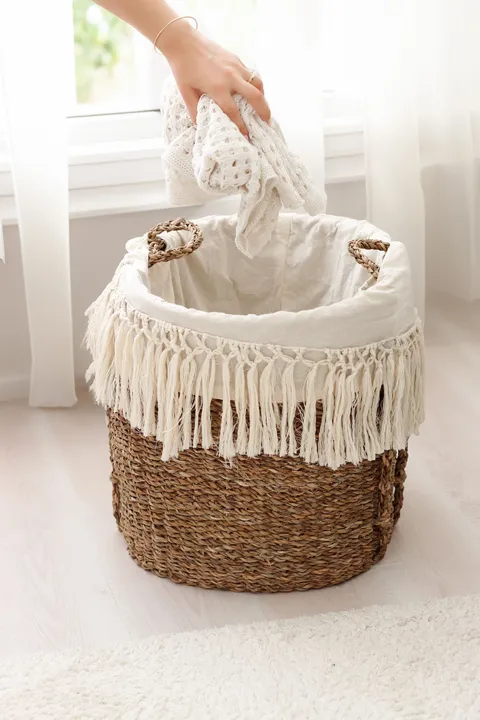
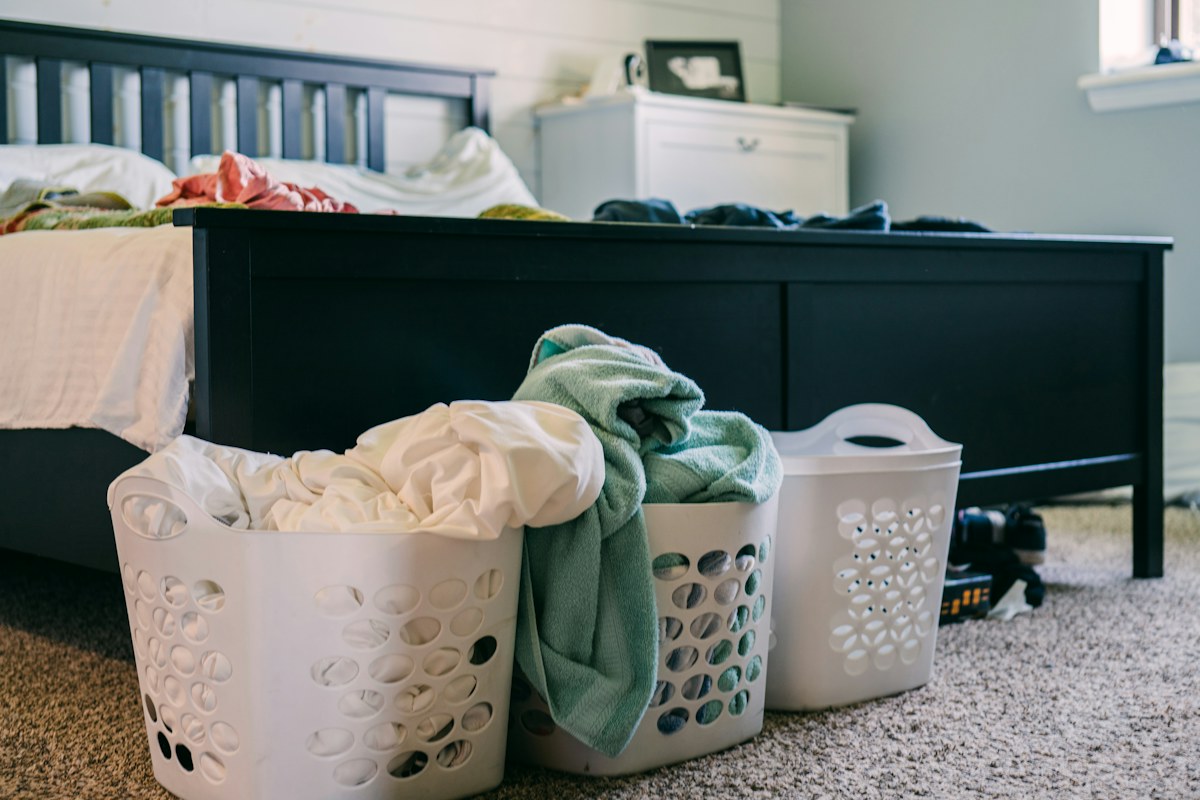
Define the stage the group represents
A basket can hold clothes at several different points unless the household agrees what it means. Start by defining the ready pickup stage for the actual garments. Required care should be complete according to the labels, and any remaining repair or condition question should remain visible elsewhere.
A neat-looking group is not enough if one person treats it as ready clothing while another sees unfinished work. Keep the distinction simple and consistent. Moving an item off an airer does not automatically answer every care or storage question it may have.
Make the owner understandable
Choose an ordinary household method: an agreed position, a bounded personal group or a direct handover. Similar garments may need more than colour to remain identifiable. Do not attach unsuitable labels or permanently alter somebody else's clothes for one laundry cycle.
Respect the owner's actual storage arrangement. Returning clothing is different from reorganising their wardrobe. Ask before changing the place a person expects to find a garment, and keep personal information appropriately private.
Include the destination
Name where the ready group goes next and who completes that move. A basket waiting beside a full drawer has reached a storage question, not a problem that a bigger basket necessarily solves. Keep the actual blocker clear rather than adding another general reminder to tidy.
Use containers, rails and surfaces suitable for the actual contents and route. Do not overload equipment or mix delicate accessories into a textile pile merely to reduce the number of journeys. The handover should reflect the real garments, not only the available container shapes.
Keep exceptions out of the confirmed group
If an item has no known owner or an unresolved care need, name that question and give it a bounded suitable place for review. Do not send it through another cycle by default or bury it beneath clothes whose next step is already clear.
A temporary exception group needs an actual review point. Otherwise it can grow into another permanent collection that obscures ready items. Resolve the identity, condition or destination through the relevant household conversation rather than moving the same object repeatedly.
Return the equipment too
Once the clothes reach their appropriate places, return the empty basket to the next agreed role. If the same container later holds another stage, make that change clear so people do not confuse ready and unfinished contents.
Follow one ordinary group all the way through before redesigning the system. The useful result is a completed transition: care understood, ownership clear, garments returned and the equipment available again. A shared pickup plan can remain modest, with no matching basket collection or elaborate chart required to make an everyday handover understandable.
Related reading
Linen Care for Everyday Living, Keep Seasonal Throws Separate From the Everyday Collection.
Published and updated June 12, 2022. Have a correction or a useful question? Contact the journal.