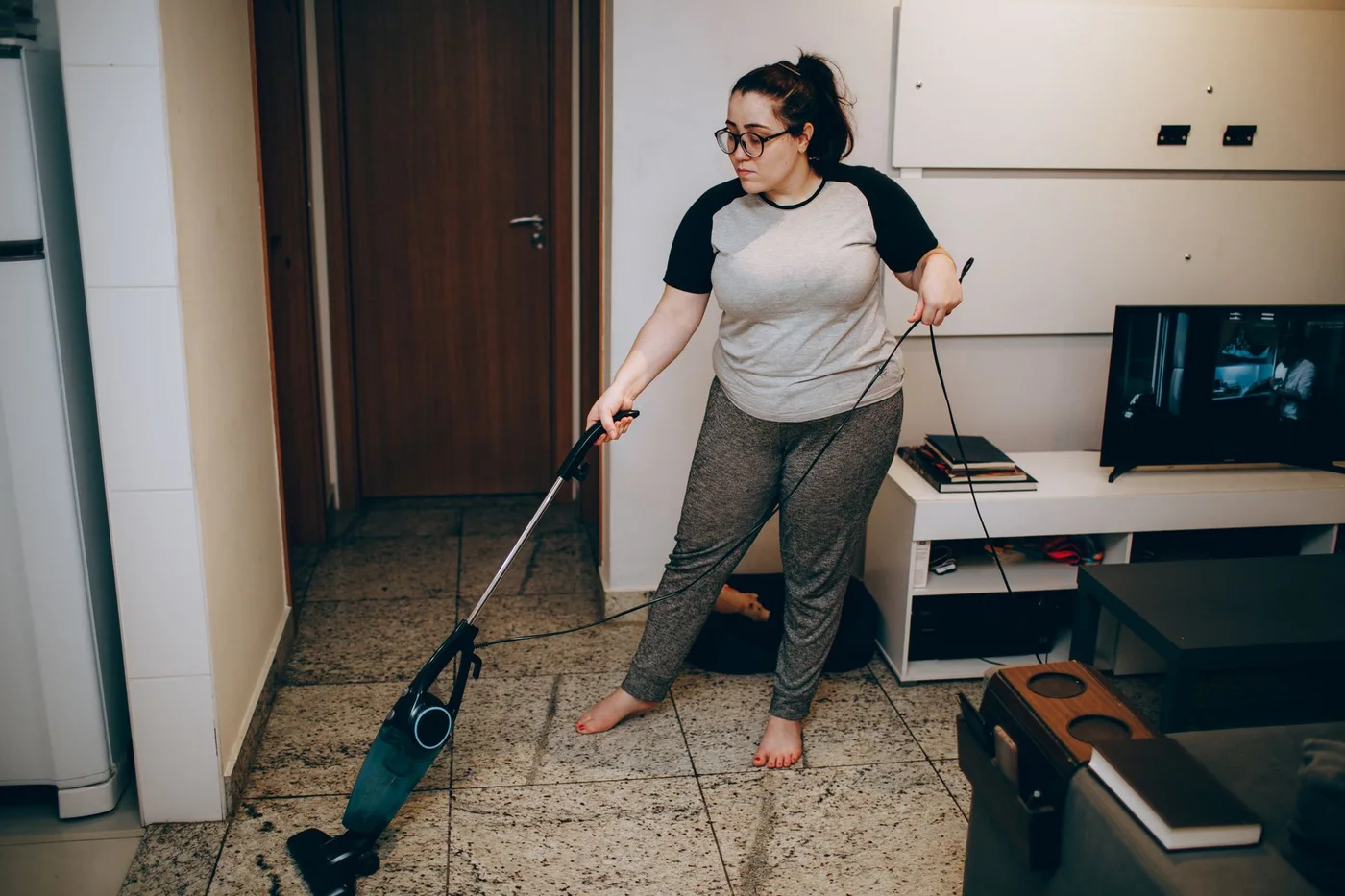
A living-room clean-up before the working week.
Decide what Monday needs
A Sunday reset begins with a question more useful than a cleaning checklist: what will make tomorrow morning less awkward? Perhaps the coffee cups are in the dishwasher, the shoes you need are under a chair, and the bag by the door contains Friday's receipts. Start there. Choose three outcomes, such as a clear counter, usable work clothes, and an entryway you can walk through without stepping around parcels. A home does not need to be ready for photographs to function well. Give the reset a defined end that fits the weekend you are actually having.
An hour may be available on a quiet afternoon, while twenty minutes might be all you have after visiting family. Divide time by outcomes rather than rooms. Returning dishes improves several spaces at once. Keep repairs and donation-center trips on a separate project list.
Clear before you clean
Carry one basket through the living space and collect things that belong elsewhere. Return them when their destination is obvious. If something has no home, do not hide it in another storage box simply to tidy the shelf. Decide whether it belongs near where you use it, in longer-term storage, or outside the household. A collection basket works best when it is emptied, rather than becoming a second drawer of miscellaneous objects. Once surfaces are clear, work toward the floor so you are not repeatedly cleaning the same area.
Follow care instructions for furniture finishes and cleaning products, especially when you do not know what a surface is made of. A caddy helps when it reduces trips between cupboards; it is unnecessary when your collection already fits an accessible shelf. Store household products as their labels direct.
Treat laundry as a complete task
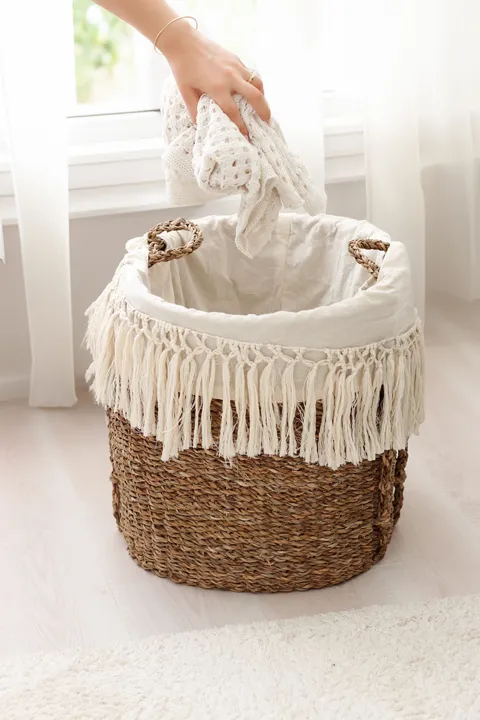
Starting a load is only part of laundry. Check whether there is time and space to dry it and put it away. Separate pieces with special care requirements rather than hoping the usual cycle will suit them. Set aside tomorrow's outfit before it disappears into an unfinished load. If folding everything is unrealistic, finish the pieces that crease easily and return knitwear to its drawer in a way your storage allows. Before buying a hamper, observe where clothes accumulate. A narrow basket near the bedroom door may work better than a decorative one across the room.
Compare handles, empty weight, ventilation, and removable-liner care. Divided hampers can help a household sort as it goes but use more floor space. A folding drying rack is convenient only when you have somewhere to open it fully and somewhere to store it closed.
Leave tomorrow a small landing place
Finish with keys, the bag you will carry, a jacket suited to the forecast, and anything that needs to leave the house. Glance at the calendar so a meeting or dinner invitation does not become a morning surprise. Keep notes specific: bring the parcel is more actionable than get organized. Avoid adding a purchase to every inconvenience. Removing unused bags may solve a crowded entryway more effectively than a new bench. Record recurring problems and buy for those precise jobs. A realistic reset leaves time for a meal, a walk, a conversation, or an afternoon when no household task is being improved.
A quick decision guide
| Option | Useful for | Consider |
|---|---|---|
| Open basket | Gathering displaced objects | Needs emptying |
| Divided hamper | Sorting as you go | Floor space |
| Folding rack | Temporary drying space | Open dimensions |
Before you buy
Measure cupboard and floor space before adding organizers. Comfortable handles and cleanable surfaces matter more than decorative details. The right purchase eliminates a recurring problem or makes an existing task easier; a coordinated collection is not required.
A few useful answers
What if I have fifteen minutes?
Clear dishes, gather the clothes you need, and place essentials by the door. Schedule deeper cleaning separately.
Must every room be finished?
Choose the areas affecting your next day most and give the reset a stopping point.
Published and updated October 10, 2026. Have a correction or a useful question? Contact the journal.