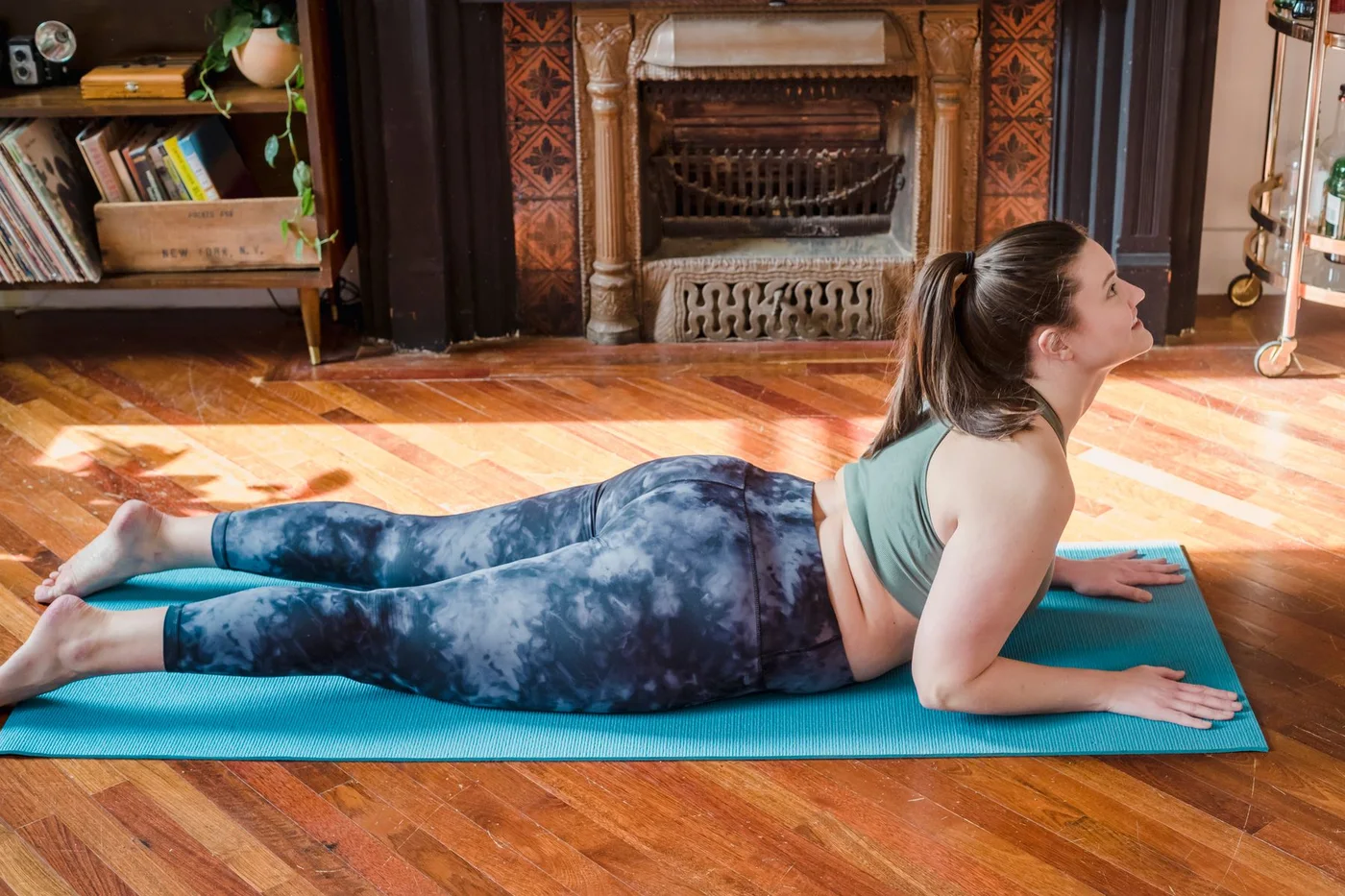
A living-room mat that can be rolled away after use.
Map the room before shopping
A living room can be a place for movement without becoming a permanent equipment display. Start with the floor area you can genuinely clear. Move the coffee table as you would during an ordinary session and notice furniture edges, ceiling height, and the surrounding space. A rolled mat in a corner reveals little about its full footprint. Lay out a towel or mark a rough rectangle to understand the dimensions before buying. Build around an activity you understand or a session led by an appropriately qualified instructor. This guide concerns equipment organization rather than exercise selection or individual health advice.
Different activities require different clearances and surfaces, so follow the equipment and instructor guidance for your circumstances. In a shared home, agree when the space is available and where furniture can move. Setting out equipment should not require rearranging the entire household.
Compare mats beyond their color
Length, width, material, thickness, and care instructions matter more than an attractive palette. A thick mat feels different from a thin one and may not suit every activity. Read what the manufacturer says it is designed for, including the intended surface. A mat on a rug may behave differently from one on a hard floor. If you roll it away daily, check the rolled diameter, empty weight, and whether a strap is included. Some materials can take longer to flatten, and product photographs rarely convey texture.
Clear return conditions help when a material is unfamiliar. Follow cleaning and drying instructions instead of using whichever household spray is nearby. Let the mat dry as directed before storage and choose a location where it is not squeezed behind a hot appliance or bent around furniture.
Add equipment for a known purpose
A starter bundle may contain objects that never leave the basket. Begin with the items required for the sessions you intend to follow. If a class calls for a particular prop, compare its dimensions and construction with the instructor's directions. Do not substitute something merely because it looks similar. Read usage, inspection, and storage guidance for resistance equipment or weights. Matching colors do not make pieces interchangeable, and a useful product description should explain more than a lifestyle photograph.
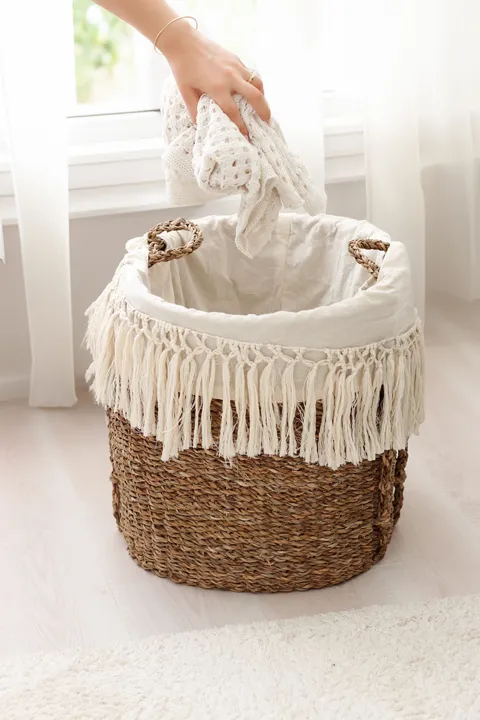
Storage should reflect weight and frequency of use. A decorative basket may hold towels but may not be intended for heavy equipment. Check shelf capacity and avoid arrangements where retrieving one object pulls others down. A shallow handled container can be easier to move than a deep bin, provided it is designed for the contents. You can create an orderly setup with fewer pieces.
Plan the five-minute pack-away
Give each item a destination: a suitable place for the mat, a washable bag for towels, and a small pouch for accessories. Keep care instructions accessible, especially for equipment requiring periodic inspection. If you follow a video, plan a stable screen position with a clear view and suitable cable placement. Avoid balancing a device on a precarious stack of books. Consider household interruptions before the session begins. When finished, return furniture and equipment to their ordinary places so the living room still functions for everyone.
Record what made setup awkward. Perhaps the strap is difficult to close or the towel storage is across the home. Resolve those details before adding more gear. A clear patch of floor and an easy storage routine can be a complete solution for activities that suit your situation.
A quick decision guide
| Option | Useful for | Consider |
|---|---|---|
| Roll-up mat | Compact storage | Rolled diameter and weight |
| Folding mat | Flat storage sections | Seams and intended activity |
| Storage container | Keeping suitable items together | Contents and rated capacity |
Before you buy
Spend first on equipment specified for your intended activity, then consider storage. Verify dimensions, materials, instructions, and return conditions. Supplements and decorative accessories are not necessary to organize a movement space, even when nearby advertising features them.
A few useful answers
Is a bundle worthwhile?
Only when its contents match planned activities. Compare the cost of the pieces you will actually use.
Can equipment stay in the living room?
Yes, if space allows. Keep walkways clear and store everything according to its instructions.
Published and updated October 10, 2026. Have a correction or a useful question? Contact the journal.