Find the pattern already doing the work
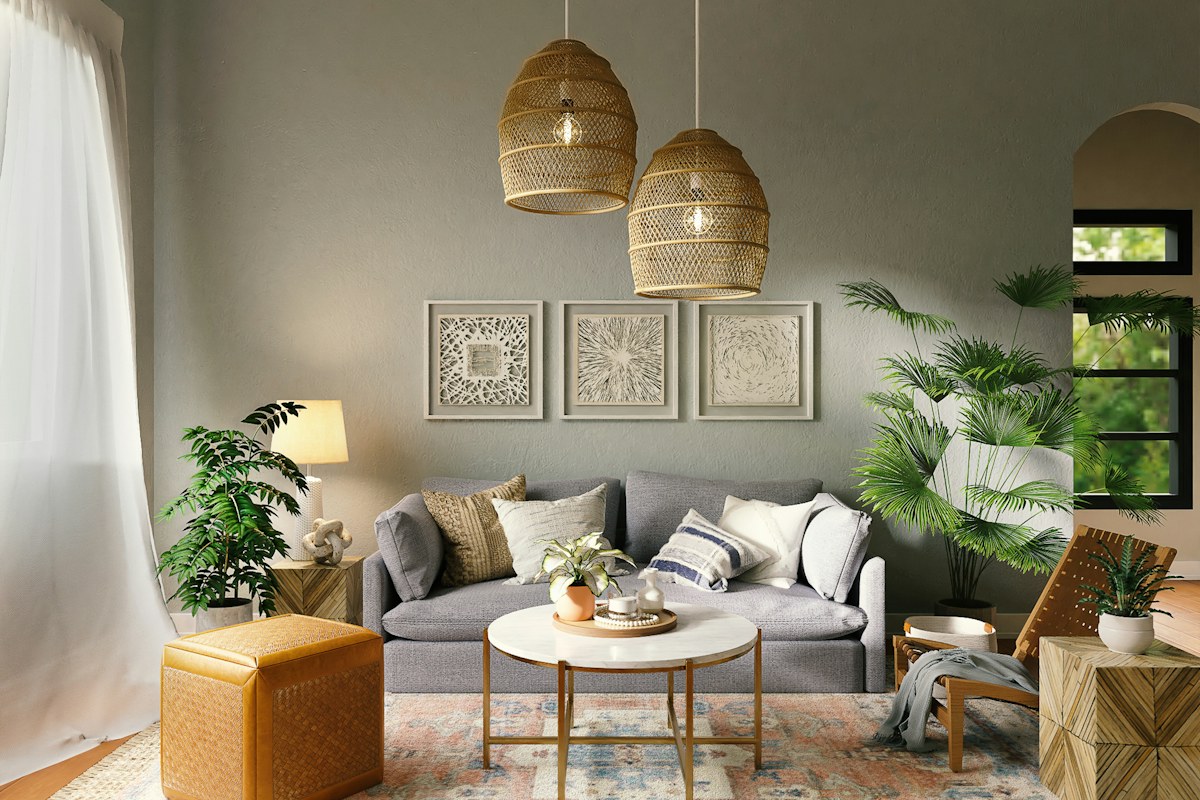
A sofa corner can contain pattern in cushions, a rug, artwork or even a woven shade. Look at the complete retained group before choosing another textile. Name the feature you most enjoy seeing from the ordinary entrance, not simply the newest object.
A broad motif can remain clear across the room while a fine design merges into texture. Check the view from the nearby seat as well. The useful comparison includes the distances at which the household actually experiences the corner.
Give the selected feature a quiet neighbour
Start with a suitable plain retained surface beside the pattern. It might be upholstery, a cushion or a stretch of wall. The quieter area lets the chosen design show its contribution without requiring every other object to disappear.
Exact colour matching is optional. A related warmth or one visible tone may give enough connection. Compare the physical pieces in ordinary light instead of using several separate product images as evidence that a coordinated group will work.
Remove one competing piece
Set aside an optional printed textile and look again with the furniture unchanged. If the chosen pattern becomes clearer, the room may already have the edit it needs. Keep the seating and textiles genuinely used by the household available in suitable places.
Bring a piece back only when you want to compare its actual role. Several cushions added together can conceal which one changed the balance. A modest one-at-a-time trial is easier to understand than a complete rearrangement made for a single photograph.
Read scale as well as colour
Two patterns can share shades and still compete because their visible scales are equally strong. Conversely, a large artwork and a fine textile texture may sit quietly together. Describe what you see rather than assuming a shared colour automatically makes every print a partner.
If a new textile remains useful, record the specific role it should fill. A broader plain area or a quieter texture is a clearer brief than something that ties everything together. That vague request can expand into several purchases without resolving the first question.
Keep the room useful
Choose textiles for their intended use and care routine, not only their decorative surface. A visually successful group should leave the actual seats available and avoid a maintenance arrangement the household cannot comfortably repeat.
Save the smallest complete version you enjoy and name the selected leading pattern. When another accessory is considered later, compare it with that real reference. One print can give a corner character while quieter pieces support it through ordinary use. The empty areas around the pattern are part of the choice, leaving the room personal without another detail filling every gap or a matching purchase proving that each object belongs.
Related reading
Arrange Sofa Cushions Around the Seats People Use, Keep Seasonal Throws Separate From the Everyday Collection.
Published and updated May 1, 2022. Have a correction or a useful question? Contact the journal.