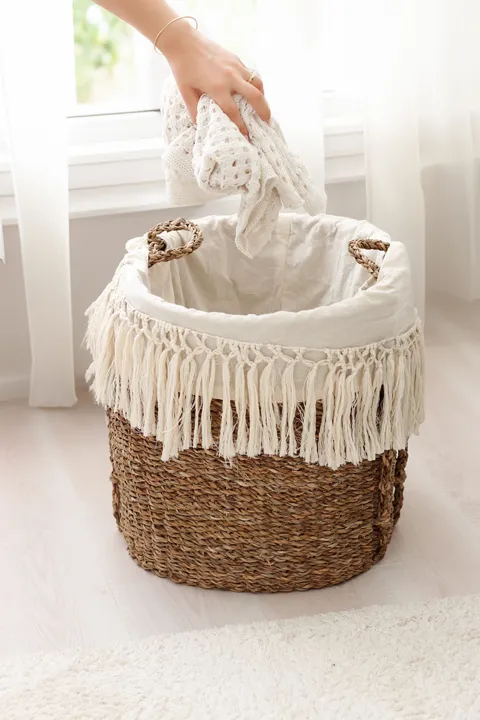
Name what the basket should hold
A basket can soften the appearance of a room while making its contents harder to find. Start with a specific collection: the current knitting project, suitable spare throws or another clear group. A label such as miscellaneous often hides several unresolved destinations.
Choose the collection before the basket. The objects' size, weight and care needs should guide the storage. A matching set is optional; easy retrieval and a clear return are the practical reasons for adding a container.
Measure the usable interior
Check the basket's internal dimensions and the shelf or floor position where it will live. Tapered sides and handles can reduce usable space or make removal awkward. Test the actual objects rather than relying only on the outer product measurements.
Read material and care information. A basket suitable for dry textiles may not suit damp items or a different household location. Keep furniture load and access requirements in the plan if the basket sits on shelving.
Leave room for ordinary return
Put the objects inside and remove them as during normal use. Check whether returning an item requires exact packing or moving several unrelated pieces. A little usable space can make the routine easier rather than count as wasted capacity.
Keep small or unsuitable objects stored according to household access needs. A decorative container does not make every collection appropriate for an open living-room position. The actual contents remain central to the decision.
Make concealed contents understandable
Use a plain label where it helps, placed at the normal viewing angle. A clear word or suitable picture can work without a detailed inventory. Keep the label easy to update appropriately when the collection changes.
Our home reset guide helps with the return habit. The surface guide can identify objects that need real homes rather than temporary concealment before guests arrive.
Test before buying another
Live with one suitable basket through ordinary use and note what repeatedly lands elsewhere. The collection may be too broad, the position inconvenient or the container too small. Adjust that specific point before extending a coordinated storage scheme.
Our active-book guide offers another example of a clear current group. A room can feel more settled when a few objects have understandable destinations, even if the containers are different colors or materials.
Basket-planning questions
Does every basket need a label? No. A visible obvious collection may be understandable without one. Labels help when contents are concealed or several baskets look alike.
Can a basket solve every table pile? Identify the objects' real destinations first. Hiding unrelated tasks may postpone rather than resolve them.
What if the basket fills immediately? Recheck the category and actual dimensions. More storage is useful only when it supports a clear manageable collection.
Published and updated May 1, 2026. Have a correction or a useful question? Contact the journal.