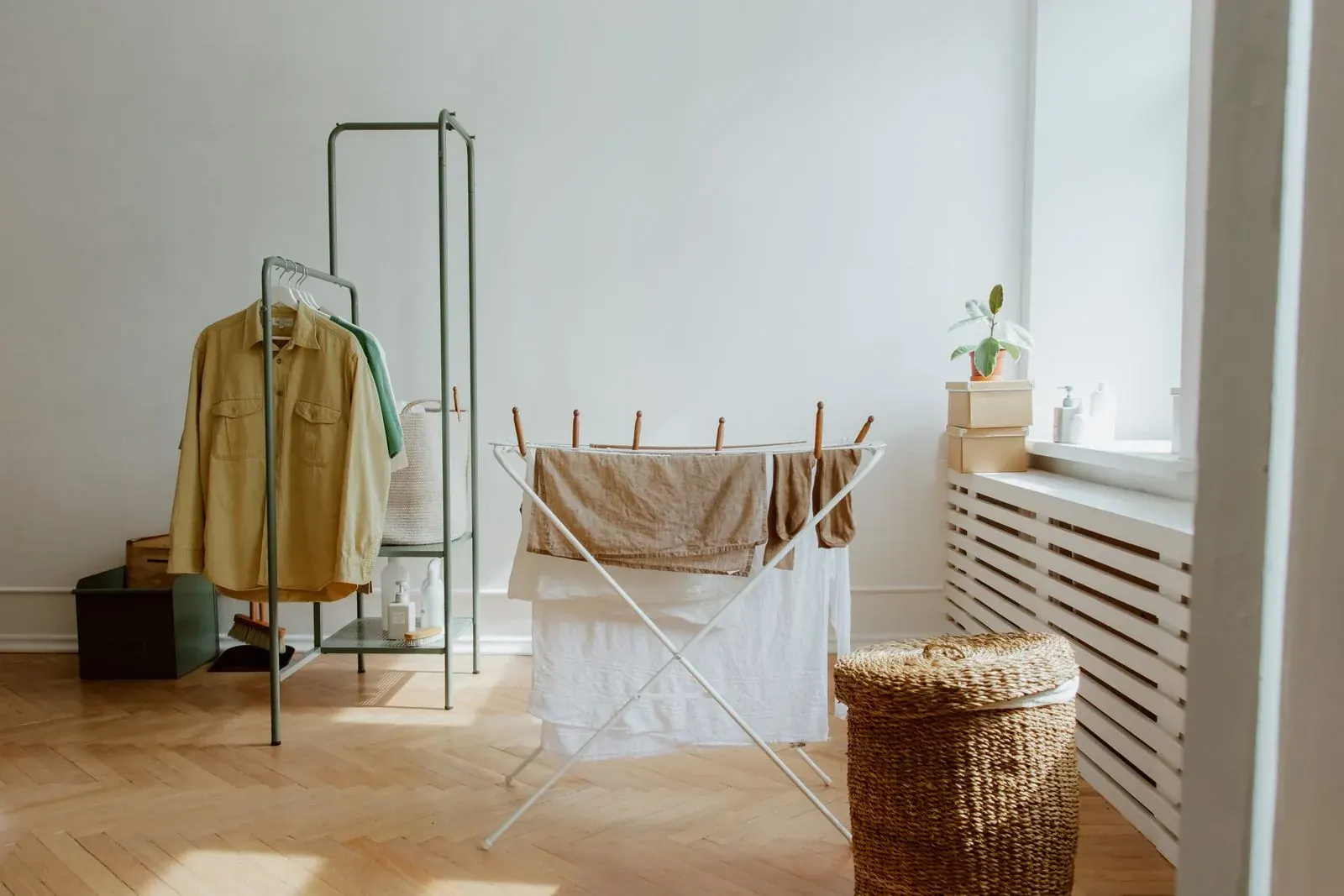
A drying rack's advertised width may describe its frame without showing the space needed to use it. Sleeves, towels and the person hanging them extend beyond that outline. Compare the full working shape before choosing a rack for a room that still needs to serve other household activities.
Read the complete dimensions
Check which dimensions describe the open and stored positions. Wings, raised sections or extendable parts can change the footprint substantially. Read the exact model information instead of estimating from a photograph of the rack beside a wall.
Identify the intended use and load guidance. A compact frame does not establish what it can suitably support. Choose equipment appropriate to the textiles and the household's ordinary laundry routine, following both rack and garment information.
Mark the open frame first
Use a simple paper outline or measurements to understand the proposed position in a clear suitable space. Include the direction in which each wing opens. Keep doors, drawers, equipment and ordinary routes usable rather than measuring only the patch directly beneath the frame.
Consider setup too. A rack that fits once open may still need more space while being unfolded. Follow its intended mechanism and keep fingers clear of moving joints. Do not force an arrangement that depends on squeezing the frame between unsuitable surfaces.
Add the fabric's working space
Think about the clothing and linens that will actually hang there. Long sleeves and wider items can occupy space beyond the bare bars. Leave suitable spacing and conditions for the textiles to dry according to their needs, rather than treating every bar as a place for the maximum possible load.
Include the person doing the hanging and collection. Walk through the ordinary route with the proposed outline visible, then compare the position again from the chair or doorway used during the evening. A rack close to a wall may have one side that is hard to reach. Moving it while loaded can create another handling problem, so compare access before assuming every rail will be equally useful.
Plan the room's return
Choose a suitable stored position for the empty rack and check the complete folded dimensions. Keep the stored equipment stable and out of ordinary routes. A room is not fully returned to use if the folded rack becomes an obstacle beside the doorway.
After a few loads, notice which part of the arrangement repeatedly needs changing. The issue may be the rack position, the type of textile or the amount drying at once. Adjust that specific part before buying a second frame. A useful drying rack fits the household through opening, loading, drying, collection and storage, with the room still able to support its other ordinary roles.
Related reading
Make a Shared Laundry Pickup Understandable, Linen Care for Everyday Living.
Published January 12, 2022. Updated January 12, 2022. Explore the journal’s support information. Contact the journal.